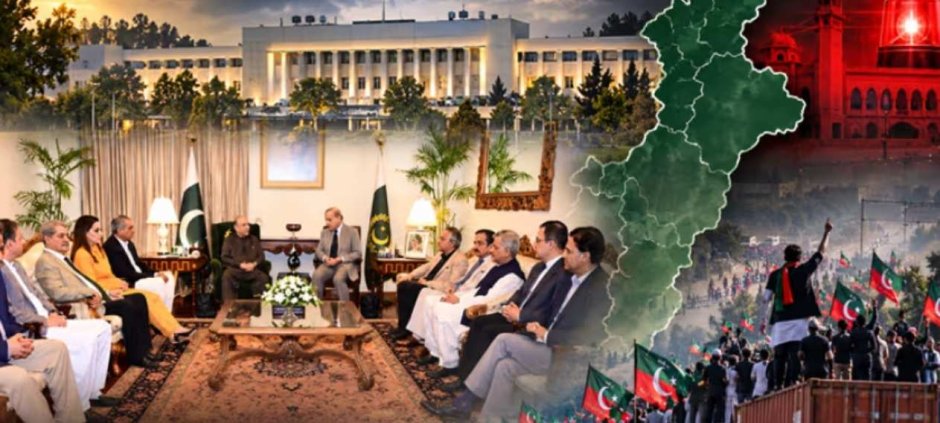
President Asif Ali Zardari has signed a proclamation imposing an emergency and governor’s rule in Khyber Pakhtunkhwa on October 11, 2026, following advice from Prime Minister Shehbaz Sharif. The move comes amid rising security concerns and allegations that the provincial government has failed to adequately address terrorism.
According to the President’s Secretariat, the decision followed a federal cabinet meeting, security reports and unsuccessful talks between federal government representatives and the KP leadership.
The proclamation invokes Articles 232 and 234 of Pakistan’s Constitution, introducing significant changes to the province’s administration and the powers of its elected government.
Why Has Governor’s Rule Been Imposed?
The federal government has cited an increase in terrorist attacks targeting government installations, infrastructure and law enforcement personnel.
Security reports referenced in the announcement reportedly highlighted a 195% rise in terrorist incidents between March 1, 2024, and September 23, 2026. The reports also identified more than 9,000 vacant police positions, shortages of modern weapons and night-vision equipment, and limited Safe City coverage outside Peshawar.
The federal government has alleged that the KP government failed to respond adequately to the deteriorating security situation. These claims remain the federal government’s stated justification for the move and are disputed by the Pakistan Tehreek-e-Insaf (PTI).
What Changes Under Articles 232 and 234?
Article 232 allows the President to proclaim an emergency when Pakistan’s security, or that of any part of the country, faces a grave threat from war, external aggression or internal disturbance beyond a provincial government’s ability to control.
Article 234 addresses a different situation: when a province cannot be governed in accordance with the Constitution. It allows the President to act on a report from the provincial governor and provides for the transfer of provincial executive functions and assembly powers under specified constitutional procedures.
The KP proclamation combines both provisions, making its constitutional interpretation particularly significant.
What Happens to the KP Government?
Under the proclamation described by the President’s Secretariat, Chief Minister Sohail Afridi and the provincial cabinet cease to hold office. Provincial ministers, advisers, special assistants and the advocate general are also removed from their positions.
The federal government may direct Governor Faisal Karim Kundi to exercise some or all provincial government functions. Under Article 234, the powers of the KP Assembly become exercisable by or under the authority of Parliament.
The High Court’s constitutional powers cannot be assumed or suspended under these provisions. The precise operation of the proclamation, however, may become the subject of legal and constitutional debate.
What Does Parliament Have to Do?
The Constitution establishes deadlines for parliamentary consideration of the proclamations.
Under Article 232, a joint sitting of Parliament must be summoned within 30 days. The emergency expires after two months unless approved by the required parliamentary process. Article 234 also requires parliamentary approval for governor’s rule within two months, with extensions permitted for additional two-month periods, subject to a maximum duration of six months.
The application of Article 232’s provincial assembly resolution requirement and its separate ten-day parliamentary approval provision may also become central to the legal debate surrounding the KP decision.
PTI Rejects the Decision
PTI leaders have rejected the imposition of governor’s rule, describing it as an attack on provincial autonomy and democratic governance. The party has said it intends to challenge the move through constitutional, legal and democratic forums.
The decision also comes amid political tensions surrounding PTI’s planned march towards Islamabad and its demand for the release of former prime minister Imran Khan.
Governor Faisal Karim Kundi has called for unity and warned that legal action would be taken against those who disrupt law and order. Jamiat Ulema-e-Islam-Fazl chief Maulana Fazlur Rehman, who had been involved in efforts to mediate between the federal and provincial governments, also called an emergency meeting of his party’s core committee.
What Happens Next?
The immediate focus will be on the implementation of the proclamation, the transition of administrative responsibilities and Parliament’s consideration of the constitutional measures.
The federal government has appointed Dr Muhammad Fakhar Alam Irfan as KP chief secretary, while provincial police have reportedly been placed on alert amid concerns about possible protests.
The next major developments are likely to involve parliamentary proceedings, the response of PTI and other political parties, and any legal challenges concerning the constitutional requirements for imposing emergency measures and governor’s rule.
The situation remains politically sensitive. The coming weeks will be important in determining how the federal and provincial authorities exercise their powers and whether the proclamations secure the parliamentary approvals required by the Constitution.
Also read: CM Gandapur Prohibits Governor Kundi from KP House