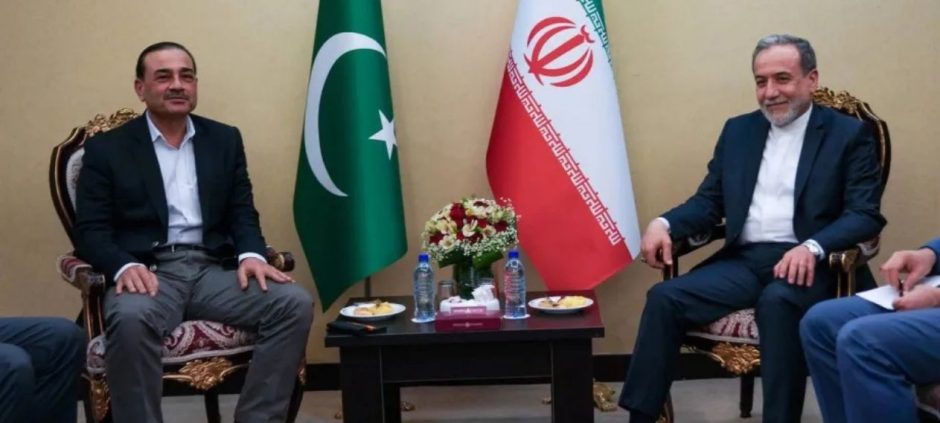
Iranian Foreign Minister Abbas Araghchi has held a second round of telephone conversations within 24 hours with Saudi Foreign Minister Prince Faisal bin Farhan and Pakistan’s Chief of Army Staff, Field Marshal Syed Asim Munir, as regional diplomatic efforts intensify amid renewed tensions surrounding the Strait of Hormuz and ongoing discussions between Tehran and Washington.
According to Iran’s Mehr News Agency, the high-level calls focused on the latest developments in regional diplomacy, efforts to preserve stability in West Asia, and the progress of initiatives aimed at reducing tensions through political dialogue.
The conversations came at a time of heightened diplomatic activity, with several regional and international players seeking to prevent further escalation following weeks of uncertainty surrounding the Strait of Hormuz, one of the world’s most strategically important maritime routes.
Focus on Regional Stability
Mehr News reported that Foreign Minister Araghchi separately spoke with Saudi Arabia’s Foreign Minister Prince Faisal bin Farhan and Pakistan’s Army Chief Field Marshal Syed Asim Munir on Monday.
During both conversations, the leaders reviewed the latest diplomatic initiatives designed to maintain regional peace and stability while emphasizing the importance of dialogue and regional cooperation in addressing ongoing security challenges.
According to the report, all sides agreed that political engagement and diplomatic mechanisms remain the most effective path toward resolving disputes and preventing further instability in the region.
The discussions also highlighted the importance of strengthening regional cooperation frameworks to address shared security concerns and support long-term peace.
Second Round of Calls in 24 Hours
Monday’s conversations marked the second round of discussions between Araghchi and the Saudi and Pakistani leadership within just 24 hours.
On Sunday, the Iranian foreign minister had already spoken separately with Field Marshal Asim Munir, Prince Faisal bin Farhan, and Turkish Foreign Minister Hakan Fidan, according to Iran’s official news agency IRNA.
The rapid pace of diplomatic engagement reflects growing efforts by regional stakeholders to coordinate responses to evolving geopolitical developments and reduce the risk of wider conflict.
US-Iran Negotiations Back in Focus
The renewed diplomatic activity follows comments by US President Donald Trump, who announced that fresh negotiations with Iran would begin on Monday after he decided not to proceed with previously planned military strikes against the country.
Speaking to reporters, Trump said the talks would focus on two key issues: the Strait of Hormuz and what he described as the denuclearization of Iran.
However, Iranian media rejected Trump’s assertion that Tehran had requested him to suspend military action, maintaining that Iran had not sought such intervention.
Despite differing narratives, diplomatic contacts between various regional capitals have continued to increase as all parties seek to prevent further escalation.
Strait of Hormuz Remains Central Issue
The Strait of Hormuz remains at the center of current diplomatic efforts.
Iranian lawmaker Hassan Ghashghavi, spokesperson for parliament’s National Security Commission, said mediators are working to revive a memorandum of understanding (MoU) between the United States and Iran that was reportedly agreed upon in June.
According to Ghashghavi, discussions over the strategically vital waterway have become the primary focus of ongoing negotiations, with multiple exchanges of views already taking place.
The Strait of Hormuz serves as one of the world’s busiest energy corridors, with a significant share of global oil and liquefied natural gas shipments passing through the narrow waterway connecting the Persian Gulf to international markets.
Any disruption in the strait has the potential to affect global energy supplies and international trade.
Iran Signals Commitment to Diplomacy
Iranian President Masoud Pezeshkian also reiterated his government’s commitment to diplomacy.
In a statement shared on social media, the president stressed the importance of ensuring that previously agreed commitments continue to be respected and implemented by all parties involved.
Separately, Iranian Foreign Ministry spokesperson Esmaeil Baqaei revealed that Tehran was close to reaching an agreement with Oman on a new maritime arrangement involving the Strait of Hormuz.
According to Baqaei, the proposed arrangement aims to respect the sovereignty and security interests of both countries without reopening the waterway itself, indicating that negotiations remain focused on maintaining stability while protecting national interests.
Pakistan Continues Diplomatic Engagement
Pakistan has remained actively engaged in regional diplomatic efforts as tensions continue across West Asia.
The latest discussions between Iran’s foreign minister and Field Marshal Asim Munir underscore Islamabad’s continuing role in promoting dialogue, regional cooperation, and peaceful conflict resolution.
Pakistan has repeatedly called for diplomatic solutions to regional disputes while maintaining close communication with key regional partners, including Saudi Arabia, Iran, and Gulf countries.
Officials have consistently emphasized that peace and stability in the Middle East are essential not only for regional security but also for global economic stability.
Diplomatic Momentum Builds
The flurry of high-level contacts highlights increasing diplomatic momentum aimed at avoiding confrontation and encouraging negotiations.
With discussions involving Iran, Saudi Arabia, Pakistan, Türkiye, Oman, and the United States continuing simultaneously, regional governments appear focused on creating conditions that could reduce tensions and preserve freedom of navigation through one of the world’s most critical maritime chokepoints.
While no formal agreements have yet been announced, continued diplomatic engagement suggests that regional stakeholders remain committed to pursuing political solutions rather than military escalation.
The coming days are expected to be crucial as negotiations continue and international attention remains fixed on developments surrounding the Strait of Hormuz and broader regional security.
Also read: Pakistan Hosts Saudi, Turkish, Egyptian FMs for Iran Crisis Talks