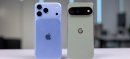
Apple and Google are going head-to-head with their latest flagship smartphones, as the iPhone 18 Pro Max and Pixel 11 Pro XL arrive with the same starting price of $1,299 for 256GB of storage.
Both smartphones target the premium flagship market and share several features, including large OLED displays, three rear cameras, magnetic wireless charging, IP68 protection and modern connectivity standards.
However, the two phones take noticeably different approaches to performance, photography, battery life, charging and artificial intelligence.
Display and Design
The iPhone 18 Pro Max comes with a 6.9-inch OLED display offering a resolution of 2,868 x 1,320 pixels.
Google’s Pixel 11 Pro XL features a slightly smaller 6.8-inch Super Actua OLED display with a higher resolution of 2,992 x 1,344 pixels.
Both phones support adaptive refresh rates of up to 120Hz, allowing smoother scrolling and animations. They also offer always-on display functionality.
Brightness is another area where Google claims an advantage. The Pixel 11 Pro XL is rated for up to 3,600 nits of peak brightness, compared with up to 3,000 nits on the iPhone 18 Pro Max.
The two devices also share aluminum frames, stereo speakers, IP68 dust and water resistance, Wi-Fi 7, Bluetooth 6 and ultra-wideband connectivity.
Both use USB-C and support magnetic wireless charging. Apple’s MagSafe and Google’s Pixelsnap systems can each reach charging speeds of up to 25W.
Performance
The most significant hardware difference between the two phones comes from their processors.
Apple’s iPhone 18 Pro Max is powered by the A20 Pro chip, while Google uses the Tensor G6 in the Pixel 11 Pro XL.
Benchmark results cited by BGR show a considerable difference in raw processing performance. In Geekbench 6 testing, the iPhone reportedly scored 4,735 in single-core and 12,545 in multi-core performance.
The Pixel 11 Pro XL recorded 2,691 in single-core and 7,203 in multi-core testing.
Benchmark scores do not always translate directly into everyday smartphone performance, but the results indicate a substantial difference in raw processing power between the two devices.
This could be particularly relevant for users who regularly perform demanding tasks such as advanced photo and video processing, gaming or other processor-intensive workloads.
Camera and Zoom
Both flagship phones feature triple-camera systems with ultrawide and dedicated telephoto cameras, but their approaches to zoom photography are different.
The iPhone 18 Pro Max features a 48MP telephoto camera with 4x optical zoom, up to 8x optical-quality zoom and as much as 40x digital zoom.
The Pixel 11 Pro XL also uses a 48MP telephoto camera, but offers 5x optical zoom and up to 120x magnification through Google’s AI-assisted Pro Zoom technology.
The Pixel’s extreme zoom capabilities are designed to preserve additional detail at very high magnifications. However, computational photography and AI processing can produce less reliable results as users approach the highest zoom levels.
Apple’s approach places more emphasis on photographic controls and manual adjustment. The iPhone offers options for changing settings such as aperture, shutter speed and white balance.
As a result, camera priorities could play an important role in deciding between the two phones.
Battery and Charging
Battery performance is another area where the two manufacturers make different claims.
Apple rates the iPhone 18 Pro Max for up to 30 hours of typical use and up to 45 hours of video playback.
Google claims the Pixel 11 Pro XL can deliver more than 30 hours of battery life.
Hands-on testing cited by BGR found that the iPhone lasted through a 25-hour travel day while providing more than eight hours of screen time. The Pixel reportedly delivered around seven hours of screen time during a typical day.
Charging speeds, however, give Google an advantage on the wired side.
The Pixel 11 Pro XL can reportedly reach around 75% charge in 30 minutes when paired with a 45W charger.
Software and Artificial Intelligence
The software experience represents one of the clearest differences between the two devices.
The iPhone 18 Pro Max runs iOS 27, while the Pixel 11 Pro XL uses Android 17.
Both manufacturers have incorporated artificial intelligence into their flagship ecosystems.
Apple offers AI-powered features through its ecosystem and Siri, while Google has integrated Gemini more deeply into the Pixel experience.
The Pixel 11 Pro XL provides a broader range of Gemini-related features, while the iPhone benefits from Apple’s integration across devices such as Macs, iPads, Apple Watches and AirPods.
For many buyers, the operating system they already use and the devices they own may therefore be more important than individual hardware specifications.
Price and Other Options
Both the iPhone 18 Pro Max and Pixel 11 Pro XL start at $1,299, with 256GB of storage.
The identical starting price makes the differences between the phones particularly important for buyers comparing flagship options.
Google also offers the Pixel 11 at $899, providing a less expensive way to access many of the company’s latest smartphone features without moving to the Pro XL model.
Previous-generation iPhone Pro models may also offer an alternative for consumers looking for Apple’s ecosystem at a potentially lower price.
iPhone 18 Pro Max vs Pixel 11 Pro XL
The two flagship phones share several specifications, but their strengths are distributed differently.
The iPhone 18 Pro Max emphasizes processing performance, battery endurance and Apple’s broader device ecosystem, while the Pixel 11 Pro XL focuses heavily on computational photography, extreme zoom, faster wired charging and Gemini-powered AI features.
Neither phone is identical in its approach, despite their matching $1,299 starting prices.
For potential buyers, the choice may ultimately depend on their preferred operating system, camera requirements, existing devices, charging habits and the features they use most frequently.
Also read: PTA Phone Tax Installment Plan Still Awaits Implementation