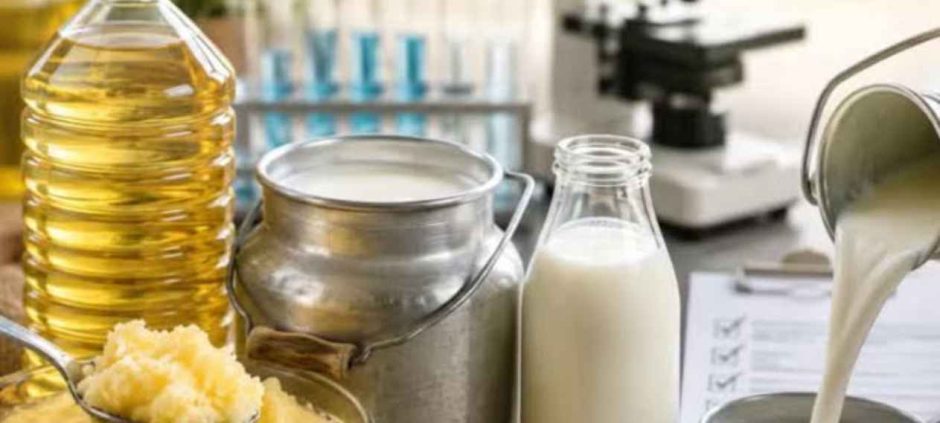
The government has called for nationwide action to improve food quality and protect public health. The move follows laboratory testing of ghee, cooking oil and milk products.
Planning Minister Ahsan Iqbal chaired a meeting of the National Price Monitoring Committee. The meeting reviewed a Pakistan Council of Scientific and Industrial Research report.
Officials also examined an Oil and Gas Regulatory Authority report. The report covered differences between notified and prevailing LPG prices.
PCSIR collected 491 food samples from different locations across Pakistan. The samples included banaspati ghee, edible oils and milk products.
Laboratory testing found several quality problems in the tested products. These included excessive trans fat, peroxide values and free fatty acids.
Other concerns included rancidity, moisture and additional quality deficiencies. The findings showed that some products did not meet required standards.
Among banaspati ghee samples, 26 contained excessive levels of trans fat. One sample recorded 15.87 grams per 100 grams.
The permitted limit under Pakistan’s standards is two grams per 100 grams. Vitamin A was also absent from 46 tested samples.
Excessive peroxide values were detected in 22 banaspati ghee samples. These findings raised concerns about the quality of products reaching consumers.
The results also showed differences between provinces. Balochistan recorded the highest nonconformity rate among tested banaspati ghee samples.
Around 79.4 percent of samples from Balochistan failed to meet prescribed standards. Sindh recorded a nonconformity rate of 63.3 percent.
Khyber Pakhtunkhwa recorded 58.3 percent of samples failing to meet standards. Punjab reported a rate of 15.9 percent.
Islamabad Capital Territory recorded the lowest rate at 5.5 percent. The results indicate varying food quality concerns across different regions.
Cooking oil samples also showed significant problems in some provinces. In Sindh, 47.7 percent of tested blended cooking oil samples were nonconforming.
Balochistan recorded a 46.6 percent nonconformity rate for the same product. Three of four refined palm olein samples also failed testing.
Milk products raised additional concerns during the laboratory assessment. All 26 nonconforming packaged liquid milk samples had low milk fat levels.
Eight nonconforming milk powder samples also failed to meet protein requirements. The findings prompted calls for stronger monitoring across the country.
The government directed relevant authorities to take action against manufacturers producing substandard products. Officials were also told to address violations at the production stage.
Iqbal said retailers should not carry responsibility for manufacturing-related quality problems. He called for stronger coordination between provincial food authorities.
The government also plans regular food testing across the country. Rural markets will be included in a quarterly monitoring system.
Iqbal warned that testing other food categories could reveal additional quality issues. He stressed that food safety remains important for public health.
The minister also linked better food standards with Pakistan’s export potential. He said the government does not aim to close industries.
Instead, the government wants manufacturers to improve product quality and follow established standards. The complete PCSIR report will also be shared with the relevant federal ministry.
In other related news also read Govt May Introduce Fixed Tax on Agriculture
The latest move highlights the need for stronger food quality checks. It also places greater focus on manufacturer compliance and consumer safety.