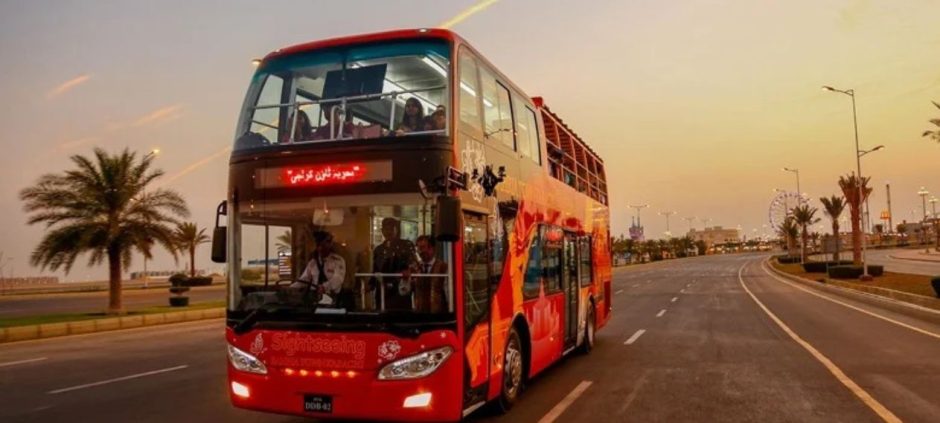
After nearly half a century, the double-decker bus service in Karachi officially resumed on Wednesday, marking a significant revival of a historic city transport icon and expanding modern mass transit options for daily commuters.
Sindh ministers Sharjeel Inam Memon and Nasir Shah presided over the inauguration ceremony, calling it a “New Year’s gift for Karachiites” and part of broader efforts to enhance public transportation across the province.
According to transport authorities, the service will initially operate on a trial basis, with buses running along Shahrah-e-Faisal from Malir to Model Colony and Zainab Market, a key artery that connects major residential and commercial districts. Fares have been kept affordable, matching those of the existing People’s Bus Service to encourage ridership.
Officials noted that five diesel-powered double-deckers and additional electric buses imported from China at a cost of around Rs 3 billion will form the first fleet set to hit Karachi roads, with automotive clearance underway at the Karachi Port Trust. Each double-decker has the capacity to carry over 100 passengers and is equipped with modern comfort features such as air conditioning.
Transport experts and city planners believe that this renewed double-decker bus service could help reduce road congestion while offering commuters a safer and more comfortable commuting option, a long-standing demand from Karachi’s growing urban population.
In related transport developments, the Sindh government recently mandated fitness certificates for all private school buses to enhance student safety on the city’s roads, a measure gradually improving road transport standards across sectors.
Officials added that integration with the city’s BRT Orange and Green Line corridors now allows commuters to travel seamlessly with a single transit card, a first for any city mass transit system in Pakistan.
The double-decker bus service in Karachi is expected to become fully operational after its trial phase and may be expanded with more routes and units in 2026, giving a fresh boost to urban mobility and sustainable public transport.