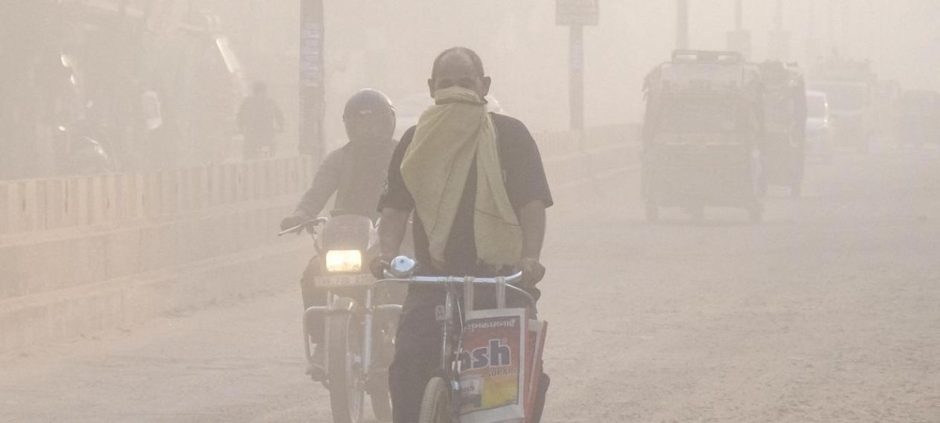
Punjab has come under renewed scrutiny as dense smog blankets the province, leading to multiple fatal road accidents that killed nine people and injured 30 others in a single day. The devastating smog conditions, which severely reduced visibility across major districts including Sahiwal, Pakpattan, Okara and Toba Tek Singh, have once again highlighted the severe health and safety risks posed by poor air quality.
In early Monday traffic chaos, several collisions took place on fog‑shrouded roads where drivers struggled to see ahead. In Pakpattan, a van collided with a tractor‑trolley, then a speeding mini‑bus plowed into the wreckage, killing a nine‑year‑old child and injuring eight others. Another motorcyclist lost his life when he collided head‑on with a slow‑moving truck in thick haze.
Officials and rescue teams confirmed that most of the accidents were directly linked to low visibility caused by hazardous smog levels. In Shahkot and Samundri, three passengers riding a motorcycle‑rickshaw and two wedding guests lost their lives in separate collisions, while dozens were rushed to nearby hospitals.
Air quality monitors show that Lahore and other urban centres in Punjab have consistently recorded “hazardous” AQI (Air Quality Index) figures throughout the smog season, with dangerous concentrations of PM2.5 and PM10 pollutants endangering residents’ health. Medical experts continue to advise people, especially children and those with respiratory conditions, to limit outdoor exposure and wear protective masks.
In response to the worsening situation, the Punjab government has intensified anti‑smog operations. Authorities have mandated environmental control measures, including sealing venues that contribute to air pollution. For instance, wedding halls and marquees failing to install mandatory smoke extraction systems are being targeted for closure and legal action, part of wider enforcement efforts to curb smog‑causing emissions.
The deadly smog‑related accidents in Punjab underscore the urgent need for stringent pollution control and public awareness. With winter months ahead and smog levels expected to remain high, authorities and citizens alike face mounting pressure to protect lives and improve air quality across the province.