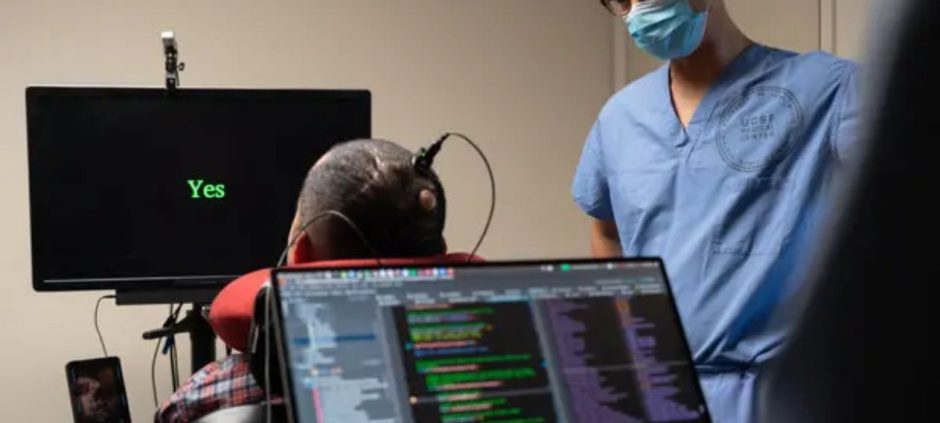
In a groundbreaking brain‑computer interface (BCI) milestone, a paralysed man in China has regained control over electronic devices with his mind just five days after brain chip surgery, scientists announced this week, a development that could redefine treatment for paralysis worldwide.
The 28‑year‑old patient, paralysed for eight years by a high‑level spinal cord injury, participated in China’s first fully implanted, wireless brain‑computer interface clinical trial conducted by the Center for Excellence in Brain Science and Intelligence Technology (CEBSIT) and Huashan Hospital in Shanghai. New reports confirm that within days of surgery, he was able to operate a wheelchair, browse the internet, play video games, and control smart home devices, all through thought alone.
This novel BCI implant uses tiny electrodes and advanced AI decoding systems to translate neural signals into commands, enabling patients to control technology without physical movement. Experts believe the breakthrough could deliver renewed independence for millions living with paralysis.
“Achieving sustained, wireless power supply and long‑term usability is key for real‑world application, and we have made significant advances,” said Professor Mao Ying of Fudan University’s Huashan Hospital.
While this Chinese innovation receives global attention, similar efforts by companies like Elon Musk’s Neuralink are also progressing, aiming to help paralysed patients navigate digital environments using only neural activity.
The societal impact of such cutting‑edge neurotechnology extends beyond medicine into wider health and infrastructure sectors. In an unrelated but revealing health update, Kerala recently reported 170 new cases and 42 deaths in its latest health data release, underscoring how advancements in medical technology and health systems are both shaping global wellbeing. You can read more about that health report here.
Although challenges remain, including safety, long‑term efficacy, and broader accessibility, scientists say the progress already achieved signals a new era of human‑machine interaction that could ultimately help many regain lost functions.