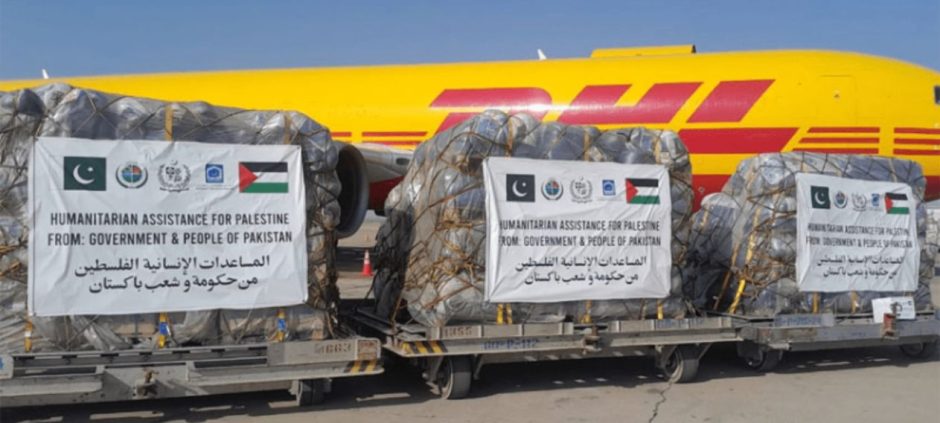
Pakistan dispatches 27th aid consignment to Palestine, reinforcing its long-standing commitment to supporting Palestinians facing ongoing hardship in Gaza and the broader region. The 100-ton shipment was sent under the directives of Prime Minister Muhammad Shahbaz Sharif and supervised by the National Disaster Management Authority (NDMA).
The relief cargo, assembled in collaboration with the Al-Khidmat Foundation, left Allama Iqbal International Airport in Lahore on a special flight carrying essential items including blankets, tarpaulins, clothing, and hygiene and family kits intended to assist war-affected civilians. With this latest dispatch, Pakistan has now sent a total of 2,627 tons of humanitarian assistance across 27 consignments to Palestine since the crisis escalated.
At the send-off event, officials from NDMA, the Ministry of Foreign Affairs, and provincial leaders highlighted Pakistan’s enduring solidarity with the Palestinian people. “Our support is rooted in humanitarian concern and shared bonds of faith and fraternity,” said one senior official, echoing Islamabad’s broader policy stance.
The move comes amid an intensifying humanitarian crisis in Gaza, where limited access to food, clean water, shelter, and medical services has been further strained by recent extreme weather events. Heavy rains and floods have worsened living conditions, with incidents such as the devastating Gaza floods that killed 16 people and displaced hundreds as heavy rains inundated makeshift shelters in refugee areas.
Pakistan’s consistent aid efforts, from food and shelter supplies to hygiene kits and basic essentials, aim to fill critical gaps left by restricted access and prolonged conflict in the besieged territory. Islamabad continues to call for unimpeded humanitarian corridors to ensure relief reaches those most in need.
Pakistan dispatches 27th aid consignment to Palestine is a reaffirmation of the country’s stance that humanitarian support must continue until sustainable peace and relief reach Palestine’s vulnerable populations.