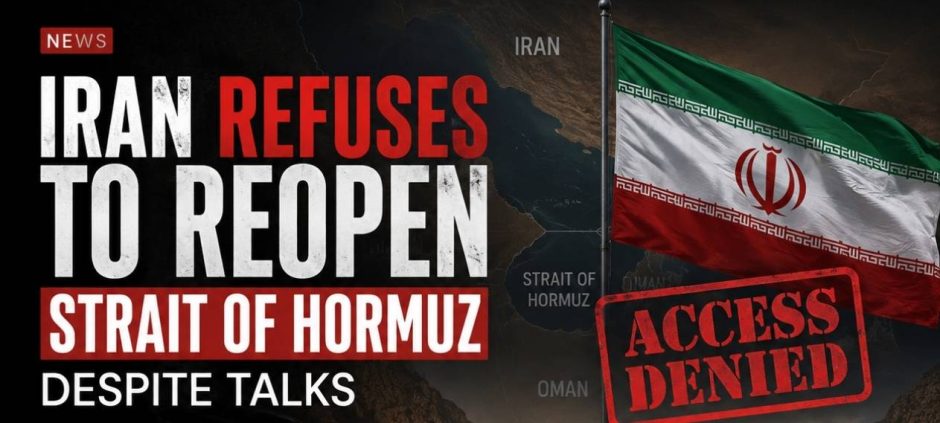
Iran has ruled out the immediate reopening of the Strait of Hormuz, despite reported progress in negotiations with Oman, saying the strategic waterway will remain closed until the United States changes its approach toward the region.
According to Iran’s state broadcaster, IRIB, high-level talks between Tehran and Muscat are progressing positively and are being conducted exclusively between the two countries. Iranian officials rejected suggestions that the United States is involved in the negotiations, insisting the discussions are focused solely on future navigation arrangements in the strategically important waterway.
Iranian authorities said that even if a new framework for maritime transit is agreed with Oman, the Strait of Hormuz will not automatically reopen. Tehran maintains that shipping will resume only after what it describes as an end to US “violations” and interference in the region.
The latest remarks came amid reports that Iran and Oman are close to finalizing a mechanism for managing future maritime traffic through the strait. However, Iranian officials accused Washington of attempting to influence the negotiations through military pressure, claiming such actions have slowed progress toward an agreement.
Meanwhile, the United States has expressed cautious optimism over ongoing diplomatic efforts. US Secretary of State Marco Rubio said negotiations were making progress, while Treasury Secretary Scott Bessent suggested a breakthrough agreement could emerge soon, raising hopes for a diplomatic resolution.
Despite the positive diplomatic signals, shipping activity through the Strait of Hormuz remains significantly below normal levels. Recent shipping data showed that only eight vessels passed through the waterway on August 4, including five oil tankers and three bulk carriers. Six vessels entered the strait, while one gas carrier and one oil tanker exited.
The slowdown reflects the continuing disruption following Iran’s closure of the strategic passage after the outbreak of the US-Israel conflict. Before the closure, the Strait of Hormuz typically handled between 130 and 140 vessels daily, making it one of the world’s busiest maritime chokepoints for global energy supplies.
Shipping activity also remains limited in the Bab al-Mandeb Strait, another key international trade route, where vessel traffic has remained unchanged in recent days. With both waterways operating well below normal capacity, uncertainty continues to weigh on global energy markets and international shipping.
Also read: CENTCOM Confirms Large-Scale Strikes on Iran