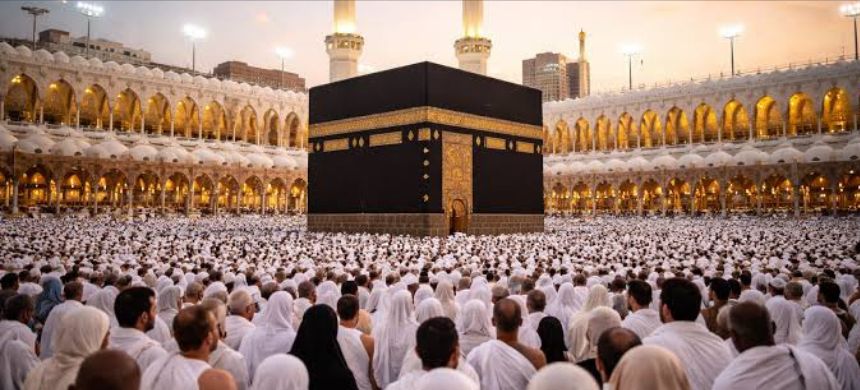
The federal cabinet has approved the Private Hajj Policy 2027–2030, presented by the Ministry of Religious Affairs, introducing a wide range of reforms to improve transparency, accountability, and service standards in Pakistan’s private Hajj sector.
According to ministry officials, the new framework replaces the previous quota-based system with a model focused on performance and regulatory compliance. Under the revised policy, all existing private Hajj operators will undergo a fresh evaluation process to assess their eligibility and operational standards.
Private Hajj quotas will now be distributed on a “first come, first served” basis. To remain active, each Hajj company must secure bookings for at least 2,000 pilgrims. Operators that fail to meet this requirement will be classified as inactive and may lose the opportunity to continue operations.
The policy also introduces stricter accountability measures. Half of the security deposit of underperforming companies will be confiscated, while pilgrims registered with such operators will be shifted automatically to other approved companies to ensure their Hajj arrangements remain unaffected.
In addition, all private Hajj operators will be independently assessed and ranked by experts. Companies will receive licences valid for three years, while the buying and selling of Hajj quotas has been completely banned. The government has also pledged firm action against cartelisation, monopolistic practices, and any attempts to manipulate the market.
A major feature of the new policy is the complete digitisation of private Hajj operations. All bookings will be processed through the Private Hajj Management Portal (PHMP), which will be integrated with NADRA and the State Bank of Pakistan to enhance oversight and verification.
Cash bookings and cash-based transactions will no longer be allowed. Hajj companies will not be permitted to hold pilgrims’ funds, as payments to Saudi service providers will be made directly through official channels. Furthermore, all Hajj-related payments in Saudi Arabia will be routed through a designated State Bank account.
Officials believe the new policy will protect pilgrims’ interests, improve transparency, strengthen oversight, and align Pakistan’s private Hajj management system with the goals of Saudi Arabia’s Vision 2030
Also Read: Kanwal Aftab Faces Backlash Following Viral Hajj Remarks