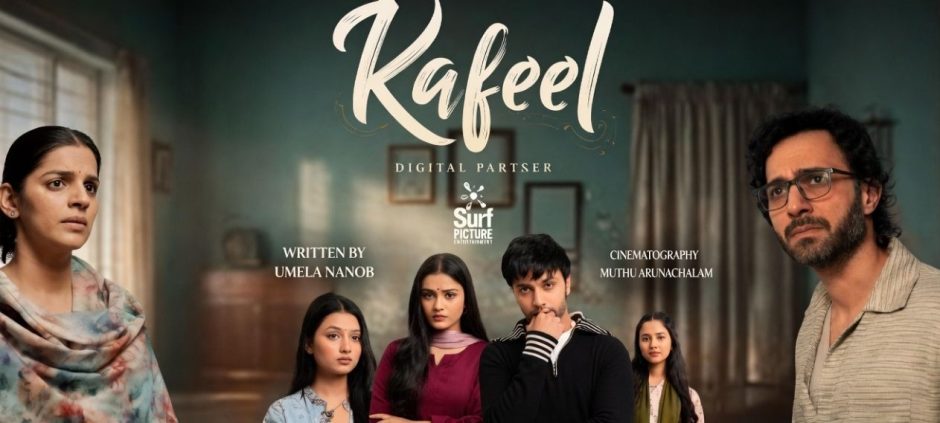
The play Kafeel is springing a bag of surprises. Nearing the end, the play is educating viewers about the downsides of suffering endlessly in a loveless and abusive marriage. The lady in question, Zeba (Sanam Saeed) is married to Jami (Emmad Irfani), who is a self-proclaimed parasite and all his life, sponges off his siblings, spouse, in laws and later, his children. In fact, the cherry on the cake is that his family’s hard earned money is also spent on the woman he wanted to marry but did not, because her father refused to marry her off to a sponger.
However, despite being happily married, she touches base with Jami every year when she returns. In the meantime, time moves forward and Zeba becomes a mother to four children. Marriage is considered to be a panacea for all problems and initially, this play also looked as if it would follow the tried and tested path, but things came to a head when Jami started stealing the money his children earned from odd jobs to support their mother.
This play drives home the message that dragging a loveless and abusive union for the sake of society, not only harms the couple but also their offspring. In fact, it is refreshing in the sense that the children are adamant about not returning to their father and give their mother the courage to file for khula. Despite the huge stigma being attached to divorce, it highlights how in certain circumstances, it is the only solution and debunks the popular belief that the offspring of broken homes have no future.
In fact, the toxic environment at home takes a psychological and emotional toll on everyone. Jami is not only a terrible husband but an even worse father, refuting the myth that men change for the better, once they have children. The basic nature of an individual never or hardly ever changes and flogging a dead horse, to avoid the stigma of divorce, is counterproductive on a number of levels.
This play also captures how Jami’s reputation negatively impacts the future of his children, which again shatters another commonly held belief that the presence of a father figure is instrumental in ensuring a secure and happy future for the children. Zeba hangs on to Jami, despite the fact that he disrespects and abuses her in every way possible, because she believes that the children of a divorced female have no future and are doomed.
To summarise, this is a laudable endeavour to destigmatise divorce and educate people about how loveless and toxic unions should not be dragged. Social pressures aside, the well-being of your children should take precedence and should be prioritised. Newly married couples are under a lot of pressure to start a family as soon as possible, but again, having children is a big commitment and the couple should try and develop an understanding first and most importantly, be on the same page, before deciding to bring children into the world. Doing so under social duress, is a grave injustice not only to yourself, but also to your offspring.
Initially, when Zeba discovers the truth about her husband, she is all set to divorce him but then, falls pregnant. Thereafter, there is no looking back, underlining how little control women have over their bodies. They keep on producing children, even if the marriage is not working, in the mistaken belief that children will help to heal the cracks in the relationship. That is grossly unfair to the children being brought into this world also, as childhood trauma manifests itself later in life. In short, please don’t have children for the sake of having them, or because you believe that they will magically somehow breathe life into a dead union or make it work.
This play has touched on many social issues and debunked quite a few commonly held beliefs. Marrying girls off in haste or without doing any background checks, as is the case with Zeba, backfires. It not only ruins and destroys her life, but her children also suffer. In the end, an entire generation pays the price for something that could have been easily avoided.
All their life, the children yearn for a father figure, but Jami always disappoints them. An immature and self-centred man, he is only concerned about himself and does not give a hoot about any of his offspring. They begin to despise him and induce their mother to file for khula. Again, this is a completely different take on a toxic union, where the children are hell bent on freeing their mother from their father’s clutches.
Why is Jami the way he is? Like everybody else, he is a product of his environment. According to him, his siblings took advantage of him and kept on plying him with money and gifts, to ensure that he shouldered his father’s responsibility, so they could carry on with their lives undisturbed. In his words, he was never taught to shoulder responsibility and was always treated as the baby of the family, expected to look after the father, while the other siblings supported him financially, as a way to assuage their guilt of not being there for their father.
This production, penned by the extremely talented Umera Ahmed, rather than preaching or moralising, encourages viewers to form their own opinions by looking at both sides of the picture. Every character is fighting a personal battle of his own and is a product of his circumstances or the situation he finds himself in. Laying the blame at someone’s door is all too easy, for standing in judgment is always easier than understanding. Not looking at the situation from the other individual’s point of view, encourages a myopic and bigoted view of the situation.
As this production nears the end, hopefully, it has given us plenty of food for thought and is another feather in the director, Meesam Naqvi’s cap, who with the help of a top notch team and a razor tight script, has done wonders, which is of course an understatement. Keep them coming!
Gaitee Ara Siddiqi
2 Kashmir Road
Lahore
Tel: 0092 305 6104252
CNIC: 35202-1333603-4
The writer is an educationist and can be reached at [email protected].