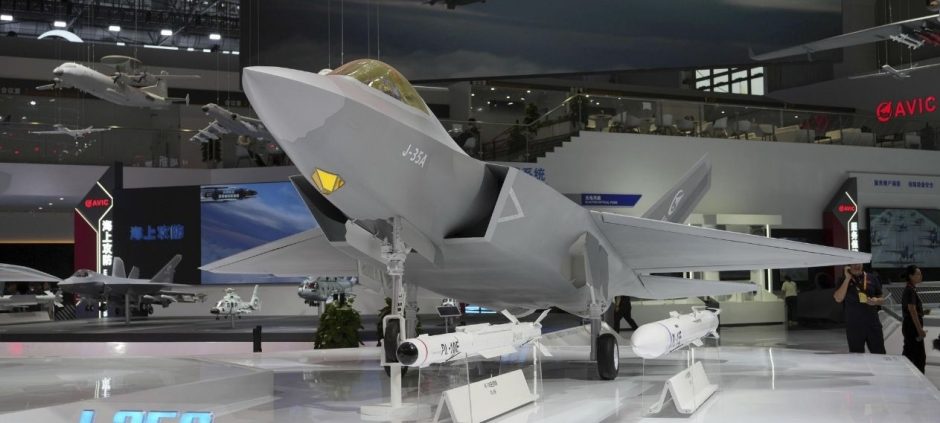
China has reportedly moved up the delivery of the J-35 Stealth Fighter to Pakistan from late 2026 to mid-2026. If confirmed, Pakistan could become the first foreign customer for China’s fifth-generation fighter.
Experts say the acquisition is more than just an aircraft purchase. The J-35 Stealth Fighter is expected to integrate with the KJ-500 airborne early warning system and HQ-19 missile-defense platform. This combination could significantly enhance Pakistan’s combat effectiveness, operational reach, and survivability.
The twin-engine export variant of the J-35 Stealth Fighter has an extended range and stealth features. It includes internal weapons bays, canted vertical stabilizers, and trapezoidal wings. With the KJ-500 support, Pakistan’s stealth jets could operate with low radar emissions while maintaining precise targeting. Analysts describe this as a network-centric combat capability.
Currently, India does not operate any fifth-generation stealth aircraft. Its Advanced Medium Combat Aircraft program is still years away from deployment. The accelerated delivery of the J-35 Stealth Fighter may force India to reassess its procurement strategy, airbase deployments, and air defense readiness.
Beyond South Asia, Pakistan’s acquisition represents China’s first major export of a fifth-generation fighter. Analysts say this move highlights China’s growing aerospace capabilities and strengthens its position as a global arms exporter. Unlike Western suppliers, China offers advanced combat platforms without strict political restrictions.
In other related news also read China Expresses Concern Over Pakistan-Afghanistan Tensions
Exact numbers and configurations of the J-35 package remain unconfirmed. However, the early delivery has already triggered strategic calculations in Islamabad, New Delhi, and Beijing. The development signals a potential shift in the air power balance of South Asia.