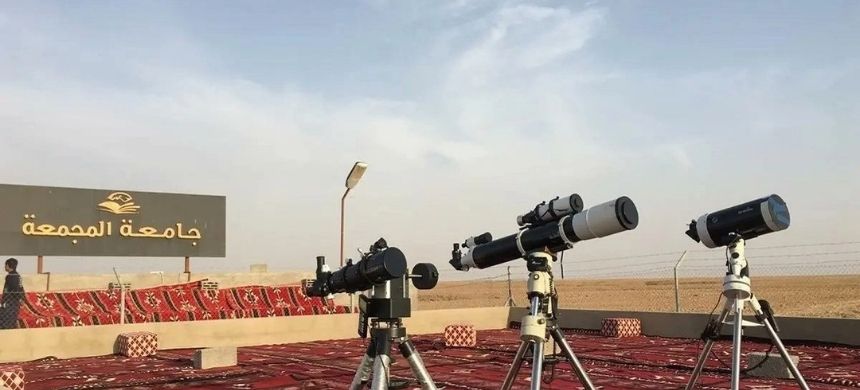
The Supreme Court of Saudi Arabia has called on Muslims across the Kingdom to observe the Shawwal crescent on the evening of Ramadan 29 (March 18) to determine the beginning of Eidul Fitr.
In its official statement, the court urged anyone who sights the Shawwal moon—either with the naked eye or using binoculars—to report their observation to the nearest court or seek assistance from local centers to formally record their testimony.
The court also encouraged citizens to take part in the official moon-sighting committees set up across Saudi Arabia. It noted that public participation in the Shawwal sighting process strengthens community cooperation and contributes to a unified announcement for the Muslim population.
The sighting of the Shawwal crescent marks the conclusion of the holy month of Ramadan and the beginning of Eidul Fitr celebrations. In Saudi Arabia, Eid prayers are typically offered the next morning shortly after sunrise, followed by festive gatherings and celebrations that continue for several days.
Meanwhile, in Pakistan, the Central Ruet-e-Hilal Committee is scheduled to meet on March 19 to observe the Shawwal moon and decide the date of Eidul Fitr. The meeting will be chaired by Maulana Abdul Khabir Azad and attended by religious scholars from various schools of thought, along with officials from the Meteorological Department and other relevant institutions.
During the session, the committee will assess moon-sighting reports collected from across the country before making an official announcement regarding Eid. At the same time, zonal Ruet-e-Hilal committees will convene in different cities to review local sightings. Their findings will be forwarded to the central body, which will issue the final decision on the Shawwal moon and the start of Eidul Fitr.
Read more: Oman Issues Important Announcement Ahead of Eid 2026