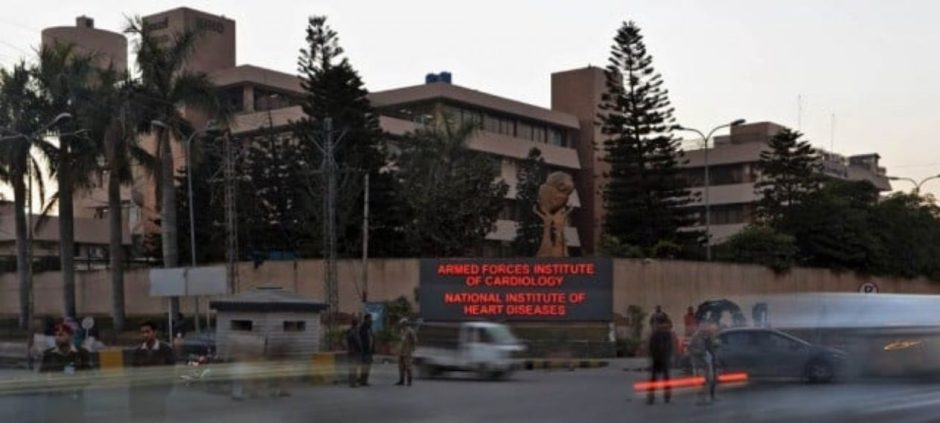
The federal government has approved a Rs13 billion expansion project for the Armed Forces Institute of Cardiology and the National Institute of Heart Diseases in Rawalpindi, aiming to strengthen tertiary cardiac care facilities for both military and civilian patients. The approval was granted by the Executive Committee of the National Economic Council during a meeting chaired by Deputy Prime Minister and Finance Minister Ishaq Dar.
Officials said the project will be funded through savings generated from slow-moving Public Sector Development Program schemes. The expansion was deemed necessary as AFIC and NIHD are currently operating beyond their designed capacity, handling a growing number of cardiac patients from across the country. Authorities believe the project will significantly ease pressure on the existing public healthcare system.
According to official details, Rs6 billion of the total cost will be covered through foreign funding. Around Rs10.5 billion has been allocated specifically for infrastructure development, while the remaining amount will be used for consultancy services and contingency expenses. An initial allocation of Rs50 million has been made for the current fiscal year, with an additional Rs2 billion required during the ongoing year to ensure steady progress.
Health officials stated that the expansion will help reduce congestion at major public hospitals by increasing treatment capacity and improving specialized cardiac services. The upgraded facilities are expected to handle complex procedures more efficiently, benefiting patients who currently face long waiting periods or referrals to already burdened hospitals.
During the same meeting, Ecnec approved three other major development projects, bringing the total value of approvals to over Rs240 billion. One of the key initiatives cleared was the Rs23.5 billion Prime Minister’s Youth Skill Development Program for 2023 to 2027. The program aims to train more than 220,000 young people in information technology, industrial skills, and conventional trades to enhance employability.
Ecnec also approved the revised Rs178.5 billion Karachi Yellow Line Bus Rapid Transit project, which will be partly financed through a $550 million World Bank loan. The 21-kilometre BRT corridor will include 28 stations and operate 256 buses, serving an estimated 300,000 passengers daily. Officials said these approvals reflect the government’s focus on improving healthcare access, modernizing urban transport, and boosting youth employment opportunities nationwide.