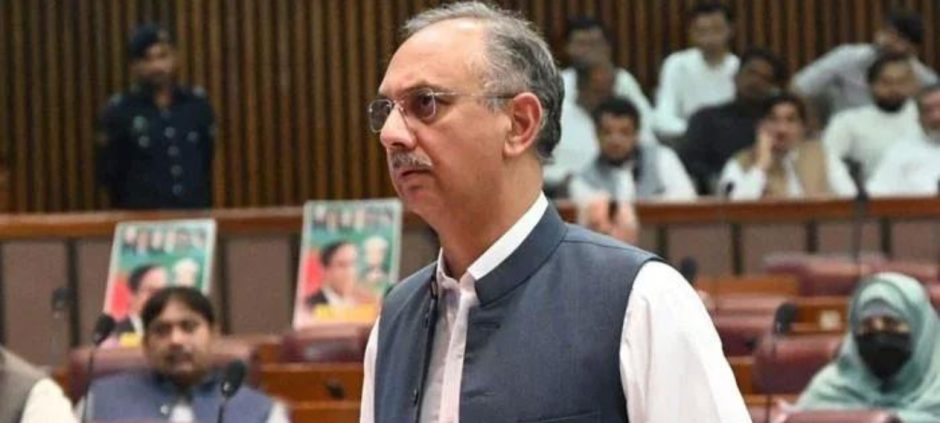
The National Assembly Secretariat has intensified its efforts to get clarity on ongoing court cases involving Omar Ayub Khan. On Monday, it sent the fourth letter to the opposition chief whip, Amir Dogar, requesting a detailed report on all pending cases against the former opposition leader. This step highlights the administrative need to ensure proper legal documentation before proceeding with parliamentary appointments.
Since Omar Ayub Khan was disqualified by the Election Commission of Pakistan (ECP), the seat of the opposition leader in the National Assembly has remained vacant. Speaker Ayaz Sadiq emphasized that the matter is “sub judice,” making it legally sensitive to appoint a new leader without proper information.
Previous Communications and Lack of Response
The NA Secretariat previously sent letters regarding Omar Ayub Khan’s cases on November 19, December 5, and December 19, 2025. Despite these efforts, no response has been received from the opposition side.
The Secretariat clarified that obtaining this information is essential to meet constitutional requirements. It ensures transparency and allows a smooth process for appointing a new opposition leader.
Legal Importance of Case Updates
The National Assembly Secretariat has become a party in some subjudice cases involving Omar Ayub Khan. As a result, they must obtain updates on each pending case. Without this information, appointing a new opposition leader is legally complicated.
The chief whip of the opposition has been formally asked to provide details about the status of each case. This information is necessary to maintain parliamentary credibility and uphold democratic processes.
Omar Ayub Khan’s Disqualification
In August, the ECP disqualified Omar Ayub Khan after his conviction in cases related to the May 9 riots. His removal left the opposition leader’s position vacant, creating a political and legal vacuum in the National Assembly.
Following the disqualification, Pakistan Tehreek-i-Insaf (PTI) founder Imran Khan nominated Mahmood Khan Achakzai for the opposition leader’s post. However, without official case details, the appointment process has been delayed.
Political Implications of the Delay
The delay in appointing a new opposition leader has raised concerns among political analysts. The PTI leadership warned that extended postponements could undermine the parliament’s credibility. A timely update on Omar Ayub Khan’s legal status is crucial to maintain democratic stability in the lower house.
This delay also affects parliamentary proceedings and decision-making. Without a formal opposition leader, certain legislative activities face potential legal and procedural challenges. The National Assembly is awaiting updates on Omar Ayub Khan’s legal cases, following the recent issuance of arrest warrants in the May 9 case. These developments continue to influence political proceedings and parliamentary appointments in Pakistan.
Current Status and Next Steps
Authorities are awaiting a written reply from the opposition’s chief whip. Once received, the NA Secretariat can proceed with the process of appointing a new leader. Meanwhile, legal experts continue to monitor developments related to Omar Ayub Khan’s pending cases, highlighting their impact on national politics.
The NA Secretariat’s actions reflect a commitment to transparency and the rule of law. They ensure that parliamentary appointments follow proper constitutional guidelines.
Analysis: Why This Matters
The case of Omar Ayub Khan emphasizes the intersection of law and politics in Pakistan. His disqualification and ongoing court cases serve as a reminder of the importance of legal compliance for elected officials.
Transparency in reporting and timely updates are critical to maintaining trust in parliamentary institutions. The public and media closely follow these developments, underlining the significance of accountability for political leaders.
Conclusion
The National Assembly Secretariat’s repeated requests for updates on Omar Ayub Khan’s cases underscore the importance of legal clarity in parliamentary proceedings. Accurate and timely reporting will allow the appointment of a new opposition leader and ensure the smooth functioning of Pakistan’s democratic process.