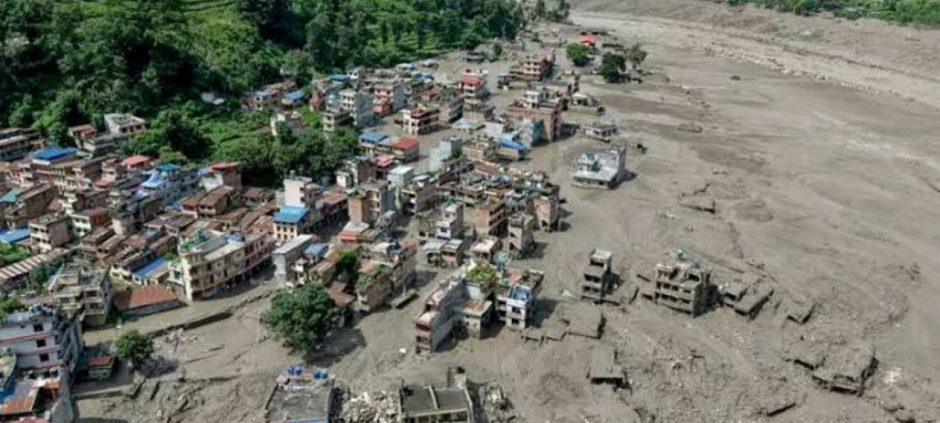
At least 165 people have died and nearly 1,500 remain missing following devastating floods and landslides along the Himalayan border between Nepal and China.
The disaster struck after a massive mass of mud and rocks collapsed into a river. The collapse triggered a powerful surge of water, mud and debris through nearby mountainous communities.
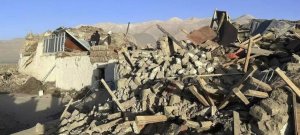
Homes, roads, vehicles and electricity infrastructure were swept away by the sudden surge. Several areas were also buried beneath thick layers of mud and debris.
In Nepal, authorities have recovered 157 bodies so far. Identification efforts are continuing as rescue teams search through the affected areas.
Around 826 people remain missing in Nepal. Officials said hundreds of foreign nationals are among those whose whereabouts remain unknown.
The missing tourists reportedly include citizens of India, the United States, Australia, Britain and Canada, among other countries.
The affected region is located along a route used by tourists, trekkers and pilgrims travelling toward the Kailash Mansarovar area in Tibet.
The remote mountain terrain has made rescue operations extremely difficult. Damaged roads and infrastructure have also limited access to several affected communities.
Across the border in Tibet’s Gyirong county, Chinese authorities have also reported hundreds of people missing.
At least three deaths have been reported in the Chinese-controlled area. South Korea said eight of its citizens working at a hydropower project in the region were missing.
Initial reports indicated that a magnitude 4.4 earthquake may have contributed to the collapse of a glacier-covered slope.
The collapse reportedly sent ice, rocks, mud and other debris into the Lhende River. Preliminary satellite assessments placed the landslide around 20 kilometres northeast of a border crossing.
Authorities are continuing rescue operations in both countries. Helicopters are being used to search for survivors and reach communities cut off by the disaster.
Emergency aircraft are also being used to deliver essential supplies. Some survivors are being evacuated from isolated areas as rescue teams reach affected locations.
The destruction of roads has created major challenges for rescue workers. Communications networks and electricity infrastructure have also been damaged across parts of the region.
China has deployed drones to assess the extent of the destruction. Authorities have also prepared aircraft, helicopters and other equipment for ongoing rescue operations.
The scale of the disaster has raised concerns about additional flooding in downstream areas.
Authorities in India’s Uttar Pradesh and Bihar have issued alerts over the possibility of floodwaters moving downstream from the affected region.
Thousands of people in Bihar have already been relocated to safer areas. Authorities are preparing for further evacuations if water levels rise.
Rescue teams remain focused on locating missing people as weather and difficult terrain continue to complicate operations.
The death toll could change as authorities recover more bodies and verify reports from remote areas.
Officials are also working to establish the identities of those killed and determine the number of foreign nationals still missing.
The disaster has caused extensive damage across communities on both sides of the Nepal-China border.
With rescue operations still underway, authorities are expected to provide further updates on casualties, missing people and the condition of affected areas.
Also read: China’s Submarine Missile Test Sparks Global Alarm