The federal government, under Pakistan’s first-ever Electric Vehicle (EV) Policy, aims to cut the transport sector’s import bill by up to $9 billion by encouraging local manufacturing and discouraging reliance on imported vehicles through a mix of taxes and incentives.
This update was shared during a meeting of the Senate Standing Committee on Industries and Production held at Parliament House on Monday, chaired by Senator Khalida Ateeb. Officials informed the committee that imported electric vehicles will be subject to new taxes, while EVs manufactured locally will benefit from zero or very low duties. In addition, duties will also be imposed on imported EV components to promote domestic production and strengthen the local supply chain.
Representatives from the Ministry of Industries told lawmakers that licenses have already been issued to several manufacturers. These include 17 licenses for three- and four-wheeled electric vehicles and 77 licenses for electric motorcycles. Four more licenses for three- and four-wheelers are currently under process. The government has set a target for electric vehicles to account for 30 percent of all vehicles by 2030, which could result in around 2.2 million EVs on the roads.
To boost adoption, the government is offering financial incentives, including subsidies of Rs80,000 for electric motorcycles and Rs400,000 for electric three-wheelers. This year, subsidies will cover 116,000 electric motorcycles and 3,170 electric rickshaws. Officials said around Rs120 billion is expected to be generated through the carbon levy, which will fund these incentives.
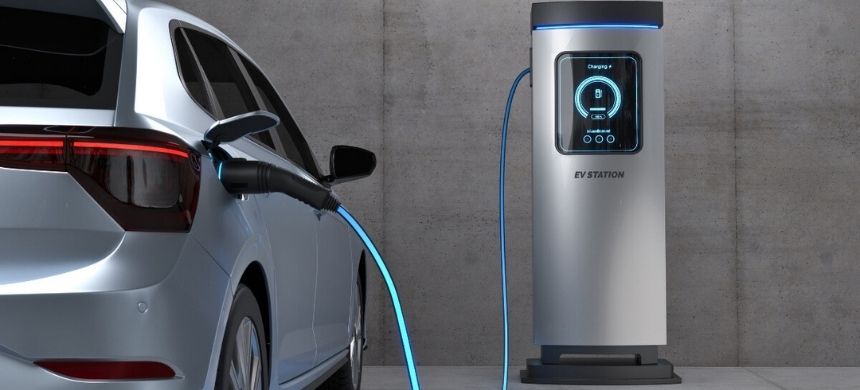
The committee was also briefed that 40 EV charging locations have been identified along the Peshawar-to-Karachi route. New legislation is being prepared to make charging stations mandatory at petrol pumps.
In recent developments, Punjab Starts Procuring Electric Vehicles for Government Officers
Officials acknowledged existing challenges, including the absence of a one-window facility for investors and quality gaps in locally produced vehicles, but said reforms are underway. Concerns over high electricity rates at charging stations were also raised, prompting the committee to summon power sector officials for clarification.