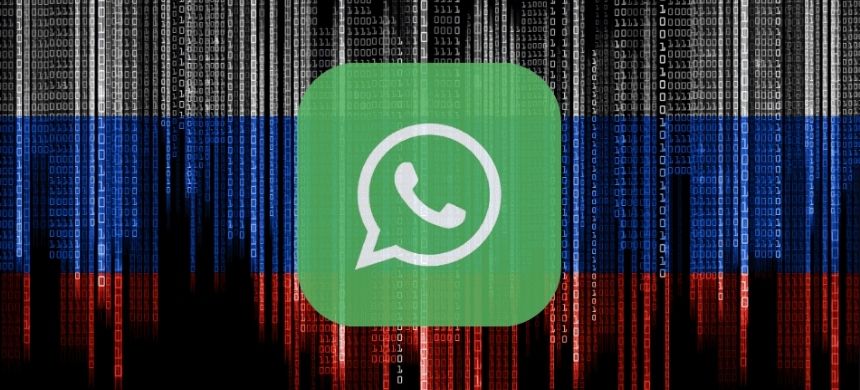
The Russian government has ordered a complete block on WhatsApp, one of the nation’s most popular messaging services, affecting over 100 million users. The decision, confirmed by Kremlin officials on February 12, 2026, comes as authorities cite concerns over legal non-compliance and data storage requirements. Many Russians have relied on WhatsApp for private and encrypted communication, making the ban a significant disruption.
Kremlin spokesman Dmitry Peskov explained that the move was necessary “due to Meta’s unwillingness to comply with the norms and the letter of Russian law.” The communications regulator, Roskomnadzor, has long criticized Meta for failing to store user data on Russian servers and alleged that WhatsApp has facilitated fraud, extortion, and other criminal activities targeting citizens. This action follows earlier restrictions on Meta-owned platforms, with Facebook and Instagram blocked in Russia since 2022 after the company was designated an “extremist organization.” Access to these platforms has since depended heavily on virtual private networks (VPNs).
Authorities are promoting Max, a state-developed messaging app, as a domestic alternative. Modeled partially on China’s WeChat, Max combines messaging with government services, digital payments, and other online functions. Since 2025, Max has been pre-installed on all new devices, and its use is increasingly encouraged for public sector workers, students, and teachers. Peskov described Max as a secure, domestically controlled option.
WhatsApp condemned the decision, warning that restricting access to over 100 million users undermines privacy and safety. Critics, including rights groups and Telegram CEO Pavel Durov, view the move as an attempt to expand state surveillance, as Max lacks robust end-to-end encryption.
The WhatsApp ban follows tighter controls on Telegram and forms part of Moscow’s broader “sovereign internet” strategy, limiting foreign services and increasing regulatory oversight. While many Russians may turn to VPNs to bypass the restrictions, the promotion of Max highlights Russia’s pivot toward domestic digital infrastructure and a growing rift with Western tech firms over control and data sovereignty.