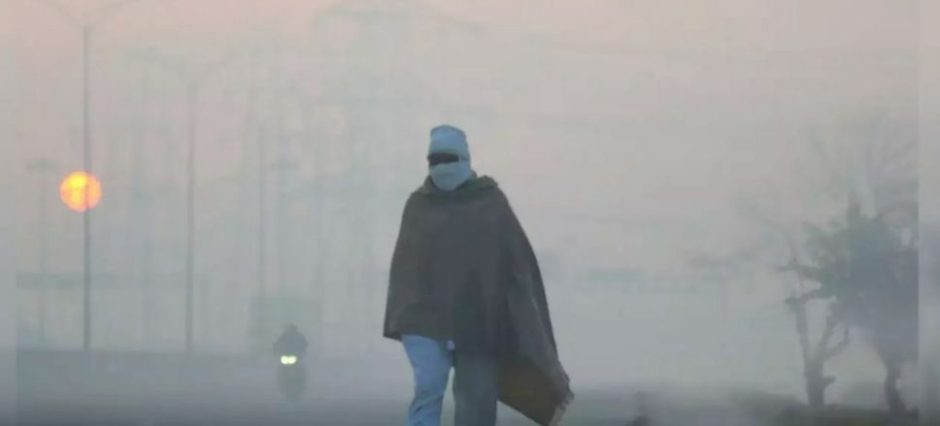
Cold conditions have tightened their grip across several regions of the country as icy winds continue to push temperatures below normal seasonal levels in major cities. According to the Pakistan Meteorological Department (PMD), the ongoing cold spell is expected to persist over the coming days, while dense fog and rising air pollution have added to the discomfort faced by residents.
In Lahore, cold winds have sharply intensified the chill, with the city recording a minimum temperature of 4 degrees Celsius. Meteorological officials said the current cold wave may last until January 18. High humidity levels, reaching up to 98 percent, have further increased the feeling of cold, despite relatively light winds blowing at around 5 kilometers per hour. No rainfall is forecast in the immediate future.
Air quality in Lahore remains a serious concern, with the Air Quality Index (AQI) recorded at 189. The city has ranked fourth among the world’s most polluted urban centers, prompting health experts to advise people to limit outdoor activities unless absolutely necessary.
Karachi has also witnessed a sharp drop in temperatures, with the mercury falling to 9 degrees Celsius due to cold northeastern winds that have affected the city for the past few days. Weather experts say cooling conditions in Quetta are influencing Karachi’s climate, with further temperature drops expected over the next two days. While daytime temperatures may reach between 24 and 26 degrees Celsius, cooler nights are likely.
Humidity in Karachi stands at 45 percent, and air quality remains unhealthy. The city ranks tenth among the world’s most polluted cities, with particulate matter levels recorded at 139 units.
Read more: Citizens Alerted to Upcoming Cold Weather Conditions
In Islamabad, cold and dry weather continues, with the minimum temperature dropping to 3 degrees Celsius. Daytime temperatures may rise to around 15 degrees Celsius, while winds blow at nearly 9 kilometers per hour and humidity remains above 60 percent. Dense fog in several areas has reduced visibility, leading experts to urge caution, health precautions, and avoidance of unnecessary travel.