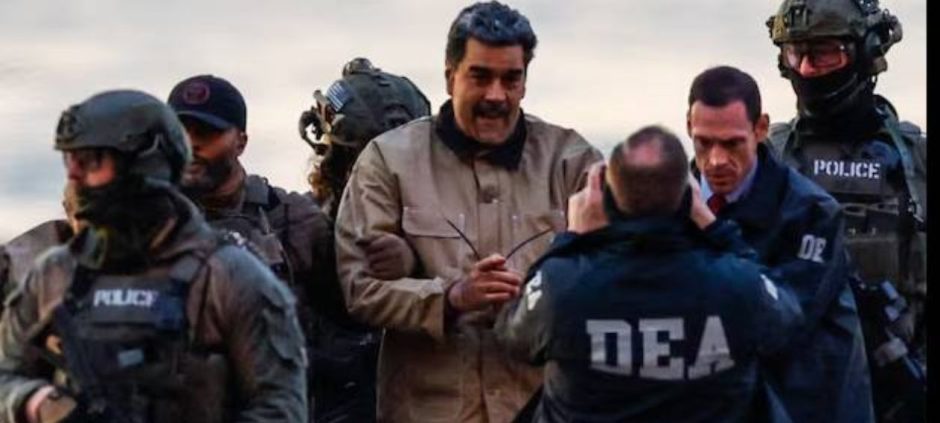
Venezuela entered a new phase of political uncertainty after Nicolás Maduro appeared in a United States court. Maduro pleads not guilty to multiple serious charges, including drug trafficking and terrorism. His court appearance followed a dramatic US operation that led to his arrest.
At the same time, Venezuela’s parliament swore in Delcy Rodríguez as interim president. Lawmakers opened the session by demanding the immediate release of Maduro and his wife, Cilia Flores. Officials described the arrest as illegal and unacceptable.
Rodríguez, who has served as vice president since 2018, addressed the assembly with strong emotion. She called the arrest a kidnapping and said the country was facing unjust foreign aggression. She vowed to protect national stability and public order.
Only hours earlier, Maduro stood before a judge in New York. During the hearing, Maduro pleaded not guilty to four major charges. These include narco-terrorism, conspiracy, and illegal weapons possession. He insisted he remained the legitimate president of Venezuela.
The court hearing lasted around 30 minutes. At one point, a man in the courtroom shouted accusations in Spanish. Maduro responded by calling himself a kidnapped president and a prisoner of war. He was then escorted out in handcuffs.
Judge Alvin Hellerstein interrupted Maduro during the hearing. The judge stated that there would be time later to address political claims. The court scheduled the next hearing for March 17.
The situation quickly moved to the international stage. The United Nations Security Council held an emergency session to discuss the crisis. Venezuela’s UN ambassador accused the United States of carrying out an armed attack without legal grounds.
The US ambassador defended the action. He described Maduro as an illegitimate leader and a fugitive from justice. He said the operation was limited and focused on law enforcement objectives.
US officials later explained the operation involved significant military resources. Over 150 aircraft and hundreds of personnel reportedly took part. American leaders argued the move was necessary for national security.
Despite criticism, US officials denied plans for regime change. Lawmakers said the goal was to force behavior change, not occupation. Still, opposition figures questioned the clarity of Washington’s strategy.
Inside Venezuela, public reaction was intense. Thousands gathered outside the National Assembly in Caracas. Protesters carried portraits of Maduro and voiced support for Rodríguez.
After taking her oath, Rodríguez promised peace and stability. She said her government would protect economic and social calm. She also signaled openness to limited cooperation with the United States under international law.
Tensions between Washington and Caracas continue to escalate as legal proceedings move forward. The latest developments are further explained in our coverage on Maduro’s Court Transfer Sparks Tensions Between US and Venezuela, highlighting the growing diplomatic strain.
Maduro’s allies remain in control of state institutions. His son addressed parliament and voiced full support for both parents. He said the family would return to Venezuela.
As the legal case continues, Maduro pleads not guilty remains a defining phrase shaping global debate. The coming weeks will test Venezuela’s political future and international relations.