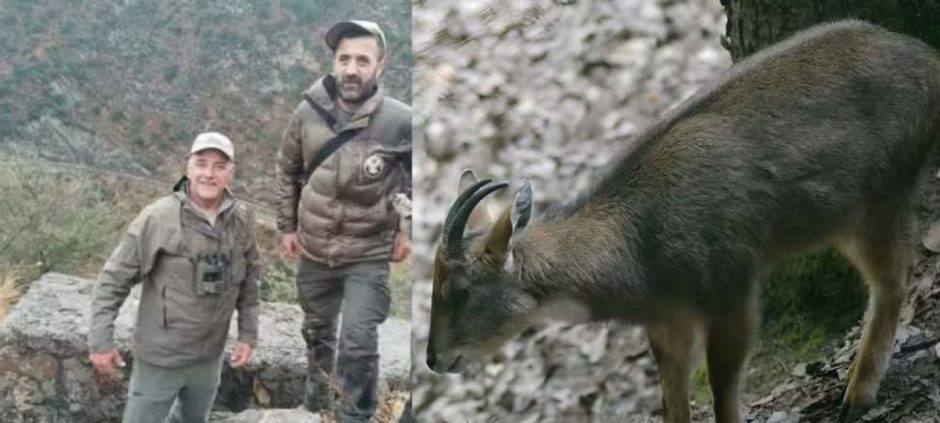
A US national legally hunted a rare grey goral in Khyber Pakhtunkhwa under a provincial trophy hunting permit, officials confirmed. The hunt took place in the Torghar area and brought in $54,500 in fees.
The grey goral is a protected mountain ungulate in Pakistan, subject to strict quota-based hunting regulations. This season, Khyber Pakhtunkhwa authorities have issued six non-exportable permits for the species, generating a total of $398,500.
Under KP’s community-based conservation model, 80% of the money from each permit is deposited into local Conservation Committees. These funds are used for wildlife protection and development projects benefiting local communities.
The provincial Wildlife Department defends the program, saying controlled high-fee hunts encourage residents to protect rare species. Officials argue that the approach also helps prevent illegal hunting.
The US hunter’s grey goral is not the only high-profile trophy kill this season. A Russian national legally hunted a Kashmiri markhor in the Gahirat–Golen conservancy of Chitral just a day earlier. The markhor’s horns measured 41 inches, and the hunting license cost $68,000.
Earlier hunts of markhor in KP generated $246,700 from six animals, with 80% of the proceeds shared with local communities. Officials say such programs combine wildlife conservation with economic benefits for residents.
The federal government has recently announced a ban on hunting non-exportable markhor, ibex, and grey goral, citing CITES regulations and the need for federal approval for such permits.
Khyber Pakhtunkhwa authorities maintain that hunting quotas fall under provincial jurisdiction following devolution. They have continued issuing permits and holding auctions despite the federal ban, emphasizing the program’s role in conservation and community welfare.
In other related news also read China Must ‘Forcefully Counter’ US Arms Sales to Taiwan: FM
Officials stress that responsible, regulated trophy hunting can protect rare species while supporting local development. The program has become a key example of balancing conservation with sustainable economic incentives in Khyber Pakhtunkhwa.