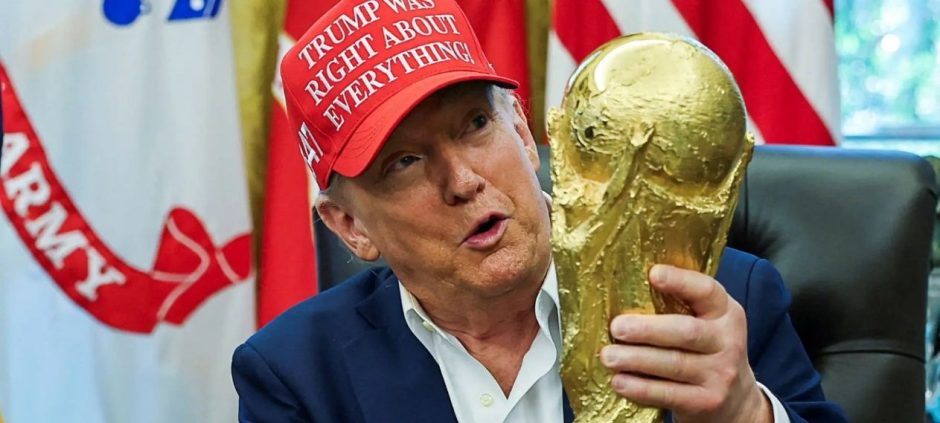
Former U.S. President Donald Trump is set to use the 2026 World Cup draw in Washington as a platform for diplomacy. The event, co-hosted by the United States, Canada, and Mexico, provides an opportunity to highlight North American unity ahead of the tournament.
During the draw, Trump will meet Mexican President Claudia Sheinbaum and Canadian Prime Minister Mark Carney. The ceremony will divide 48 qualifying teams into 12 groups, marking the first World Cup hosted by three countries simultaneously.
Despite the diplomatic occasion, tensions remain. Trump has imposed tariffs on Canadian and Mexican exports not covered under the USMCA trade agreement. He has also warned of further action over cross-border migration and drug trafficking. Previous remarks suggesting airstrikes on Mexico have particularly angered Sheinbaum, while Canada was offended by Trump’s joking suggestion it could become the 51st U.S. state.
This will be Sheinbaum’s first meeting with Trump. Trade discussions are expected to be brief. Carney will meet Trump for the first time since last November, following disputes over trade and tariffs. Carney and Sheinbaum will also have a short meeting during the event.
Trump has used football diplomacy to boost his political visibility. He enjoys close ties with FIFA President Gianni Infantino, who will present Trump with a new FIFA “peace prize” during the draw. Trump has even suggested that the World Cup could serve as an incentive for Russia to end its war in Ukraine, though Russia remains banned from international football.
Domestically, Trump faces challenges balancing sport and policy. Fast-track visas for World Cup ticket holders have been introduced, but asylum freezes on 19 countries, including participants Haiti and Iran, create uncertainty. Threats to move matches from Democratic-run cities also raise concerns with FIFA.
In other related news also read Trump’s MRI Shows ‘Excellent’ Cardiovascular Health, Doctors Say
The 2026 World Cup draw provides Trump with a unique stage to balance diplomacy, sport, and domestic priorities, though mixed reactions are expected from international and local stakeholders.