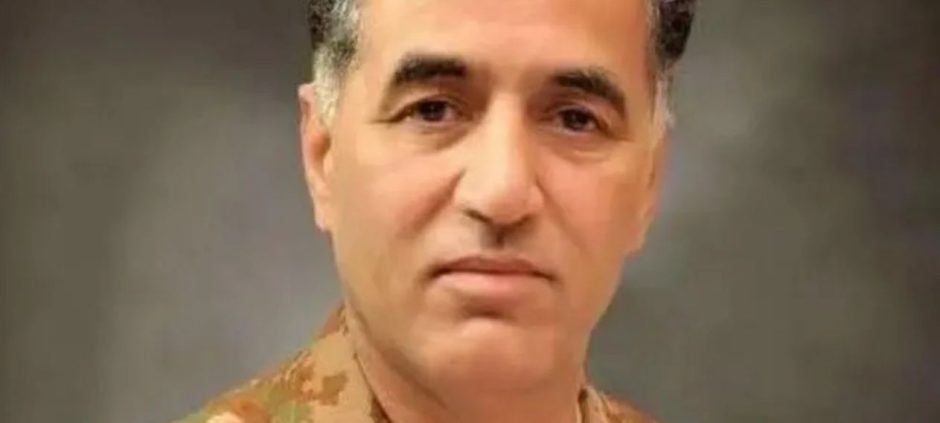
In a move that has sent tremors through Pakistan’s political and military establishments, Faiz Hameed, the former head of the powerful Inter-Services Intelligence (ISI), has been sentenced to 14 years in prison. A military court found him guilty of serious charges, including violating state secrets and meddling in politics. This verdict is a historic moment for Pakistan. It marks the first time an ISI chief, a figure often seen as untouchable, has been court-martialed and imprisoned. The sentencing of Faiz Hameed signals a major shift, raising deep questions about power, accountability, and the future of the nation.
The case brings a dramatic end to the career of a man who once held one of the most influential positions in the country. His downfall from the highest echelons of power to a prison cell is a story of political alliances, alleged overreach, and a military establishment asserting its authority. This article breaks down the entire saga, from his rise to power to the charges that brought him down, and what this means for Pakistan.
Who Exactly Is Faiz Hameed?
To understand the weight of this sentence, one must first understand the man at its center. Faiz Hameed is a retired three-star lieutenant general who led the ISI from June 2019 to October 2021. The ISI is Pakistan’s premier intelligence agency, and its director-general is widely considered the second most powerful person in the military after the army chief.
Hameed’s tenure as spymaster was closely linked with the government of former Prime Minister Imran Khan. He was seen not just as an intelligence chief but as a key pillar of support for Khan’s administration. His influence was felt across various domains, from national security to political management. Before leading the ISI, he was the head of its internal security wing, where he gained a reputation for being a sharp and effective operator.
His career took a significant turn following Imran Khan’s removal from office through a no-confidence vote in April 2022. Soon after, Faiz Hameed opted for early retirement from the army. This move fueled widespread speculation about his future and his relationship with the new military leadership. His supporters saw him as a patriot, while his critics accused him of blurring the lines between his intelligence role and domestic politics.
The Secret Trial: What Were the Charges?
The legal proceedings against Faiz Hameed were conducted away from the public eye. A military court held the trial, which spanned 15 months, beginning on August 12, 2024. The entire process was carried out under the Pakistan Army Act, which governs the conduct of military personnel.
According to a statement from the military’s public relations wing, the Inter-Services Public Relations (ISPR), the court tried Faiz Hameed on four main charges:
- Involvement in Political Activities: He was accused of actively interfering in the country’s political affairs, a violation of his mandate as an intelligence chief.
- Violation of the Official Secrets Act: This serious charge suggests he compromised state secrets, potentially harming national interests.
- Misuse of Powers and Government Resources: The court found him guilty of abusing his authority and using state resources for purposes they were not intended for.
- Causing Harm to Citizens: This charge indicates that his actions had a negative impact on the general public, though specific details were not shared.
The ISPR confirmed that the trial was not one-sided. Faiz Hameed was given the right to have a defense team of his choice to contest the charges. However, because the trial was held behind closed doors, the specific evidence and arguments presented against him remain classified. This secrecy has led to much debate and speculation about the exact nature of his offenses.
A Storm of Politics and Controversy
The case against Faiz Hameed is inseparable from Pakistan’s turbulent political landscape. His close association with Imran Khan is at the heart of the controversy. During Khan’s time in power, Hameed was often seen as the government’s enforcer, allegedly managing political alliances and silencing dissent. Critics claim he went beyond his official duties to prop up the Khan government, creating an imbalance in the country’s democratic framework.
When Imran Khan was arrested on May 9, 2023, his supporters launched massive, violent protests across the country. Allegations soon surfaced that Faiz Hameed had a hand in fanning the flames of this unrest. The military court’s statement noted that his alleged role in fomenting political agitation is being handled as a separate matter. This suggests that he could face further legal trouble related to the May 9 events.
The trial is viewed by many as a clear message from the current military leadership. It signifies a zero-tolerance policy towards personnel, past or present, who engage in political engineering. By making an example of a figure as powerful as Faiz Hameed, the establishment seems to be drawing a firm line, asserting that the armed forces must remain neutral.
In related news, read about an Australian court that recently handed Indian community leader Balesh Dhankhar a 40-year sentence.
Why This Case Is the Most Controversial in Pakistan Right Now
The conviction of an ex-ISI chief is truly unprecedented. Historically, senior military and intelligence officials in Pakistan have been immune to such public accountability. They wielded immense power and were considered above the law. The sentencing of Faiz Hameed shatters that perception. It establishes a new precedent that no one, regardless of their rank or past influence, is beyond reproach.
This case has sparked intense debate across the country. For some, it is a welcome step towards accountability and the rule of law. They see it as a sign that institutions are finally being cleaned up and that the military is serious about staying out of politics. For others, particularly supporters of Imran Khan, the trial is nothing more than a political witch hunt. They argue that Faiz Hameed is being punished for his loyalty to the former prime minister and that the case is designed to weaken Khan’s political base. Regardless of the perspective, the verdict has changed the rules of the game in Pakistani power politics.
Frequently Asked Questions
1. Who is Faiz Hameed?
Faiz Hameed is a retired Pakistani lieutenant general who served as the Director-General of the ISI from 2019 to 2021.
2. Why was Faiz Hameed sentenced to prison?
He was found guilty by a military court on charges including violating state secrets, misusing his power, and interfering in politics.
3. What is the ISI?
The Inter-Services Intelligence (ISI) is Pakistan’s top intelligence agency, responsible for national security intelligence.
4. Can Faiz Hameed challenge his sentence?
Yes, he has the right to appeal the conviction in a higher legal forum, which would be the Supreme Court of Pakistan.
5. Why is this case so important?
It is the first time a former ISI chief has been court-martialed and sentenced, setting a major precedent for accountability for powerful officials in Pakistan.