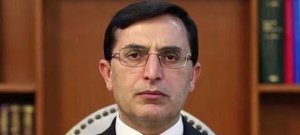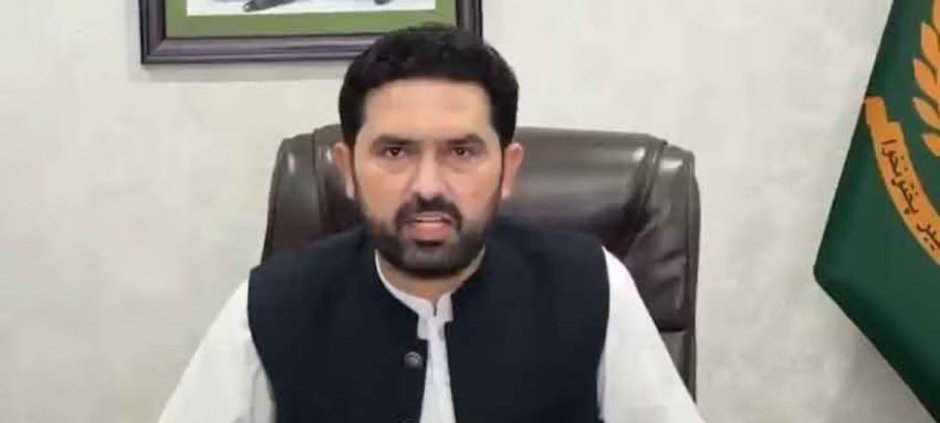
Khyber Pakhtunkhwa Chief Minister Sohail Afridi has rejected a meeting convened by Governor Faisal Karim Kundi and objected to directives issued from the Governor’s House, describing the move as unconstitutional.
Speaking at a provincial cabinet meeting, Afridi said the elected provincial government, assembly and cabinet were fully functional and maintained that the governor could not take such steps while the provincial government was exercising its constitutional mandate.
The chief minister said the provincial government would seek a detailed legal opinion on the governor’s actions. If questions about the constitutional position remained unresolved, he said the government could consider legislation through the provincial assembly.
The dispute comes amid heightened political tensions in Khyber Pakhtunkhwa, with the PTI-led provincial government and the federal government also at odds over counterterrorism policy and the party’s ongoing protest march. Recent talks between the federal government and opposition representatives ended without an agreement.
Afridi Questions Governor’s Actions
Afridi said Khyber Pakhtunkhwa has an elected government backed by a two-thirds majority and that the provincial assembly and cabinet remain operational.
He questioned the need for the governor to convene a meeting and issue directives while the elected government continues to perform its constitutional responsibilities.
The chief minister described the governor’s actions as an attack on constitutional and democratic processes, while insisting that his administration would continue to function.
Afridi said the provincial government would not accept steps that, in its view, interfere with the constitutional role of the elected government.
Legal Opinion to Be Sought
The chief minister said he would request a detailed briefing from the Advocate General of Khyber Pakhtunkhwa regarding the legal and constitutional status of the governor’s meeting and related directives.
He added that if the legal position remained unclear, the provincial government could consider legislation through the provincial assembly.
Afridi also referred to the constitutional procedure for removing a chief minister, arguing that a chief minister can be removed through the prescribed constitutional mechanism, including a vote of no-confidence.
His comments indicate that the provincial government intends to address the dispute through legal and institutional channels.
Tensions Rise Amid Political Dispute
The disagreement between the KP government and the Governor’s House comes at a time of heightened political tension in the province.
The PTI-led government has been involved in a wider dispute with the federal government over counterterrorism policy and the party’s political demands.
Recent negotiations between the government and opposition representatives ended without a breakthrough. The two sides disagreed over issues including access to PTI founder Imran Khan and how counterterrorism measures should be handled in Khyber Pakhtunkhwa.
Interior Minister Mohsin Naqvi had separately accused Afridi of undermining the negotiations, while opposition representatives said disagreements over counterterrorism policy and other political issues contributed to the deadlock.
Governor’s Rule Also Discussed
The latest dispute follows discussions about the possibility of governor’s rule in Khyber Pakhtunkhwa.
On October 5, Interior Minister Mohsin Naqvi met Governor Faisal Karim Kundi to discuss the political and security situation in the province. According to a statement from the Governor’s House, the two discussed the possibility of constitutional steps in response to the province’s security situation.
However, government officials have given different statements about the possibility of governor’s rule. Federal Minister Amir Muqam said the federal government was not in favour of governor’s rule, while acknowledging concerns over security risks.
The issue has therefore remained part of the broader political and security debate surrounding the province.
Afridi Defends KP Government
During the cabinet meeting, Afridi also defended the provincial government’s position on security matters.
He said the KP government had consistently supported the provincial police and maintained that the force possessed modern weapons and equipment needed to address security challenges.
The chief minister also criticised what he described as unequal treatment of Khyber Pakhtunkhwa by the federal government.
He raised financial and administrative concerns involving the province’s newly merged tribal districts, arguing that their financial integration remained incomplete.
Counterterrorism Remains a Major Dispute
Security policy has become one of the central points of disagreement between the KP government and the federal authorities.
During the recent negotiations, the federal government sought greater cooperation from the KP government on counterterrorism measures. Federal officials argued that provincial cooperation was necessary for implementing the national security framework.
The KP government, meanwhile, has maintained that security decisions affecting the province should involve the provincial government and its institutions.
Dawn reported that Afridi had previously argued that his province and legislature should have a role in decisions concerning security operations in Khyber Pakhtunkhwa.
PTI Protest March Continues
The dispute is also unfolding alongside the PTI’s ongoing protest march.
The march began from Lakki Marwat on October 4, with Afridi joining the movement and leading the provincial caravan. By October 6, the convoy had reached the Kohat area and was scheduled to move toward Peshawar.
According to the reported PTI plan, the march is expected to move through Peshawar and toward Swabi, with further plans to be announced as the participants progress.
The political confrontation has therefore involved both institutional disagreements between the provincial government and Governor’s House and wider disputes between the KP government, PTI and federal authorities.
Constitutional Dispute Awaits Legal Clarity
The latest disagreement between the KP chief minister and governor is likely to depend on the constitutional and legal interpretation of the governor’s powers and the circumstances surrounding the meeting.
Afridi has said his government will seek legal advice before determining its next steps. If questions remain unresolved, he has indicated that the provincial assembly could also consider legislation.
For now, the KP government maintains that the elected assembly, cabinet and provincial administration remain functional, while the dispute over the governor’s actions continues against the backdrop of wider political and security tensions.
Also read: Sohail Afridi Warns of Supreme Court Sit-In