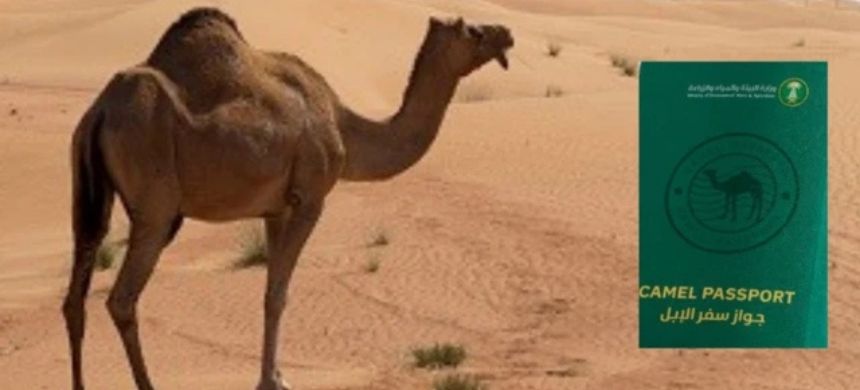
Saudi Arabia has rolled out an innovative system by introducing “camel passports,” a first-of-its-kind initiative designed for use both domestically and internationally.
The project was officially launched by Deputy Minister of Environment, Water, and Agriculture Mansour Al-Mushaiti, marking a significant step toward modernizing the management and regulation of camels across the Kingdom. Authorities described the passport as a comprehensive identification and monitoring tool aimed at improving record-keeping and oversight.
Under the new system, each camel will be issued a dedicated document that contains essential information about the animal. The passport records details such as the camel’s name, breed, gender, color, place of birth, and includes a photograph to ensure easy visual recognition. To further enhance accuracy and prevent duplication, the document also lists a unique microchip number along with an official passport number, allowing authorities to digitally track and verify each animal.
Officials say the initiative will help regulate ownership, movement, and trade of camels, particularly during transportation across borders or participation in events and markets. The system is also expected to support animal health monitoring, protect livestock assets, and reduce disputes related to identification.
Camels hold deep cultural and economic value in Saudi Arabia, with around 2.2 million animals registered nationwide as part of the Kingdom’s heritage. The Riyadh region alone accounts for the largest share, with more than 654,000 camels recorded.
By implementing camel passports, Saudi Arabia aims to simplify management practices while strengthening international standards for tracking and identification, setting a new benchmark for livestock regulation and preservation.
asd Saudi Arabia Offers Private Jet Prize for Camel Competition