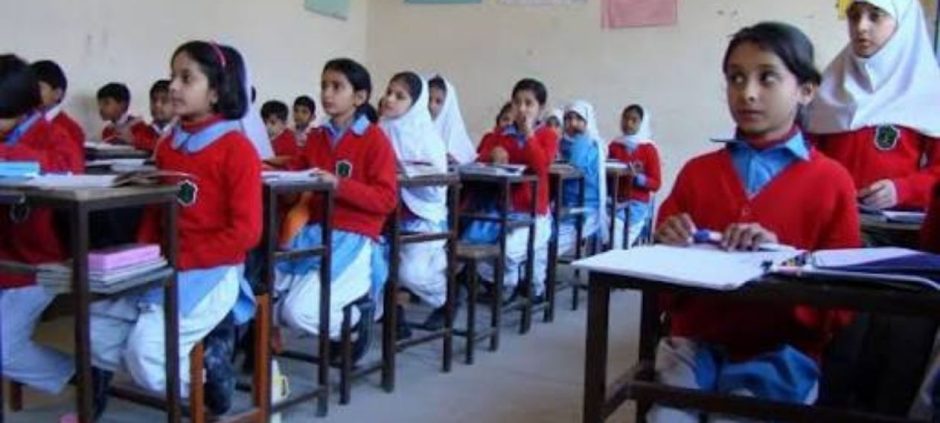
The Punjab government has started reviewing government middle and high schools with critically low student enrollment as authorities assess how teaching staff and public resources are being utilised across the province.
The School Education Department has directed district authorities to identify and verify schools where fewer than 20 students are enrolled in a class.
Following the review, authorities may consider transferring teachers from schools with very low enrollment to institutions with larger student populations. Schools could also be merged, reorganised or otherwise adjusted where necessary.
Schools With Fewer Than 20 Students Under Review
The review is focused on government schools where classroom enrollment has fallen to critically low levels.
District authorities have been asked to verify the enrollment figures before decisions are made regarding staffing and the future organisation of such institutions.
The government is assessing whether teachers assigned to schools with very small classes can be deployed more effectively at institutions where the number of students is significantly higher.
Any restructuring or merger of schools would be considered after the relevant assessment, according to the information provided by the School Education Department.
Punjab Faces Weak Class 9 Results
The review comes amid concerns over the province’s poor performance in the Class 9 annual examinations.
According to the figures cited in the report, 1,395,475 students appeared in the examinations conducted by Punjab’s nine education boards.
Of these, 641,662 students passed, while 753,813 students failed.
The overall pass rate stood at 45.98%, meaning more than half of the students who appeared for the examinations were unsuccessful.
The results have renewed discussion about the quality of education being provided in government schools and the challenges facing students across Punjab.
Experts Point to Multiple Education Challenges
Education experts have linked the weak examination results to several factors affecting public schools.
These include teacher shortages, inadequate facilities, weak foundational learning, inconsistent student attendance and limited academic support.
The combination of these issues can create difficulties for students, particularly in areas where schools lack sufficient teaching resources or basic educational facilities.
Experts have therefore called for broader reforms rather than focusing solely on the restructuring of schools with low enrollment.
Teachers’ Union Calls for Better Public Schools
Punjab Teachers Union Secretary General Rana Liaqat Ali has urged the government to improve the quality and facilities of public schools rather than pursuing privatization.
The teachers’ representative argued for strengthening government institutions and addressing the challenges that affect students and teachers.
The debate comes as authorities consider how best to use available teaching staff while also dealing with concerns about educational outcomes.
Any decision to transfer teachers or reorganise schools is likely to remain closely linked to the broader question of how Punjab can improve learning outcomes in its public education system.
Millions of Children Remain Out of School
Punjab also faces a significant out-of-school children crisis.
Recent estimates cited in the report put the number of children outside the education system at around six to seven million.
Poverty and financial difficulties remain among the factors keeping children away from classrooms.
Other challenges include child labour, early marriage, long distances to schools and inadequate educational facilities.
The large number of out-of-school children adds another dimension to the government’s efforts to manage existing schools and improve educational access.
Experts Seek Broader Education Reforms
Education experts have called for improvements in several areas alongside any review of low-enrollment schools.
These include stronger teacher recruitment, better school infrastructure, improved implementation of the curriculum and changes to assessment methods.
Experts have also stressed the importance of bringing children currently outside the education system into classrooms.
The challenge for policymakers is therefore not only to determine how resources should be distributed among existing schools but also to ensure that children who are not attending school receive meaningful opportunities for education.
Future of Low-Enrollment Schools Remains Under Review
The Punjab government’s latest review could lead to changes in teacher deployment and the organisation of schools with very low enrollment.
However, the information provided does not confirm that all schools with fewer than 20 students will be closed or merged.
Instead, district authorities have been directed to verify enrollment levels before further decisions are taken.
The review comes at a time when Punjab is facing concerns over examination performance, teacher availability, school facilities and the large number of children who remain outside the education system.
How the government balances efficient use of public resources with maintaining access to education in less-populated areas will remain an important part of the policy debate.
Also read: Punjab Schools’ Eid Holidays: Latest Update