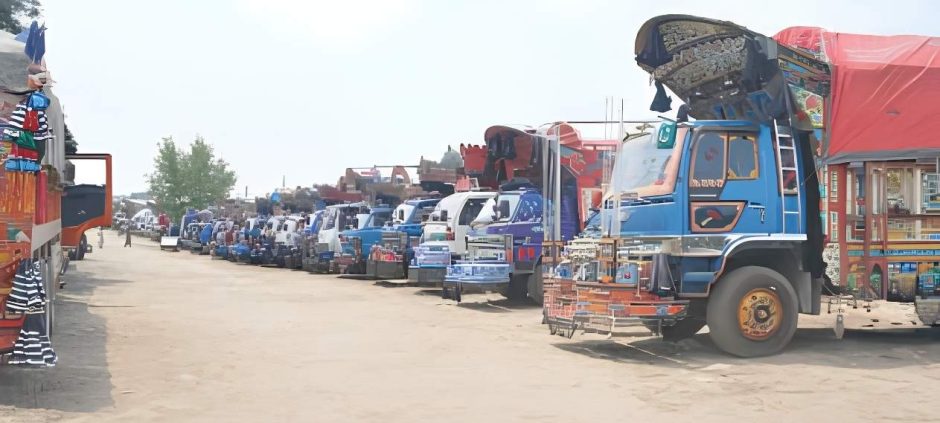
Pakistan’s nationwide goods transport strike has entered its seventh consecutive day, with transporters claiming that the prolonged wheel-jam protest has caused an estimated Rs50 billion loss to the national economy.
Transporters’ chairman Muhammad Owais Chaudhry said the strike continued across the country on Independence Day as transporters remained firm on their demands and urged the government to take practical steps to resolve the ongoing dispute.
According to Chaudhry, the transporters’ demands are legal and constitutional, and the community expects the government to address their concerns through concrete measures rather than assurances.
The nationwide strike has disrupted the movement of goods across major routes, affecting supply chains and businesses that depend on road transportation for the movement of essential and commercial products.
Transporters Reject Assurances
Chaudhry said negotiations between the government and transport representatives are underway, but no concrete course of action has been agreed upon so far.
He stressed that transporters would not call off the strike merely on the basis of verbal assurances. According to him, the government must take practical measures and implement decisions aimed at resolving the issues raised by the transport community.
The chairman maintained that the strike would continue until the government accepts the transporters’ demands and takes visible steps toward their implementation.
The prolonged shutdown has raised concerns about its wider impact on Pakistan’s economy, particularly as businesses, manufacturers, traders and suppliers rely heavily on road transport to move goods between cities and provinces.
Strike Continues on Independence Day
Despite Pakistan celebrating its 79th Independence Day, the transport strike remained in effect nationwide.
Chaudhry said members of the transport community were praying for Pakistan’s progress, prosperity and economic strength while continuing their protest.
He reiterated that transporters wanted their concerns to be resolved through meaningful negotiations and practical action rather than prolonged discussions without implementation.
The government is continuing talks with representatives of the transport sector in an effort to end the dispute. However, the absence of an agreed settlement means the nationwide wheel-jam protest remains in place.
With the strike now entering its seventh day, attention is focused on whether negotiations between the two sides can produce a breakthrough and restore the movement of goods across the country.
Transporters have made it clear that they will maintain their protest until their demands are accepted and implementation begins, increasing pressure on the government to reach a settlement and prevent further economic losses.