Prime Minister Shehbaz Sharif said Pakistan can provide Central Asia with access to its ports, including Gwadar and Karachi, to promote regional trade. He added that Kazakhstan can export its products through these ports, strengthening economic links between the countries.
Addressing the Pakistan-Kazakhstan Joint Business Forum in Islamabad, the prime minister described the current bilateral trade of $250 million as below potential. He emphasized that both countries are committed to raising trade to $1 billion through joint efforts.
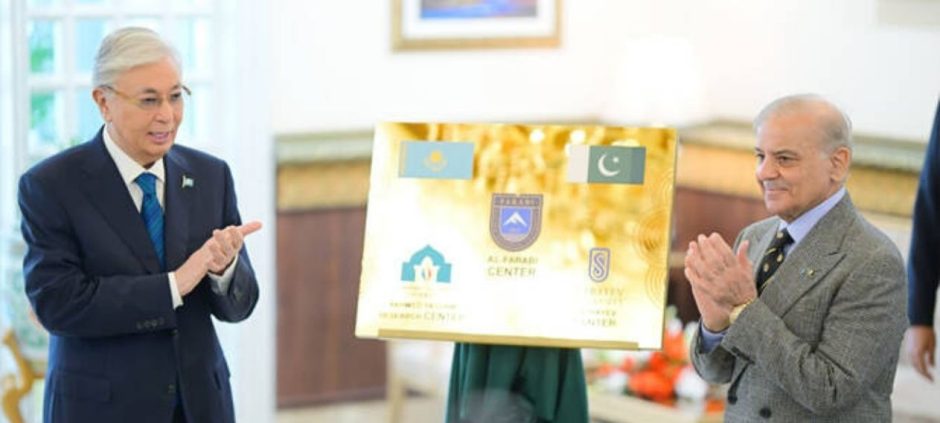
Kazakhstan’s President Kassym-Jomart Tokayev termed his visit as a historic milestone in Pakistan-Kazakhstan relations. He highlighted the shift toward a strategic partnership and noted that over 30 trade agreements worth $200 million were signed at the forum. Both leaders expressed hopes that trade could reach billions of dollars in the coming years.
Earlier, in a bilateral meeting, PM Shehbaz and President Tokayev agreed to enhance political, economic, defense, and people-to-people ties. They also announced the formation of a Pakistan-Kazakhstan Strategic Partnership to strengthen long-term cooperation. Chief of Defence Forces Field Marshal Syed Asim Munir and Deputy Prime Minister Ishaq Dar attended the meeting.
The forum emphasized private-sector engagement, regional coordination, and transit trade cooperation. A working committee was formed to prepare a five-year bilateral trade roadmap. Discussions also focused on education, culture, tourism, and energy cooperation.
At the signing ceremony, 37 memoranda of understanding and agreements were signed between the two countries. PM Shehbaz welcomed President Tokayev, highlighting that this was the first official visit by a Kazakh president to Pakistan in 23 years. He said discussions were constructive and will help achieve shared economic and trade goals.
In other related news also read Pakistan Trade Deficit Widens 28% in 7 Months
Officials said the partnership is expected to strengthen Pakistan’s trade ties with Central Asia, attract investment, and provide new opportunities for business, education, and employment in both countries.