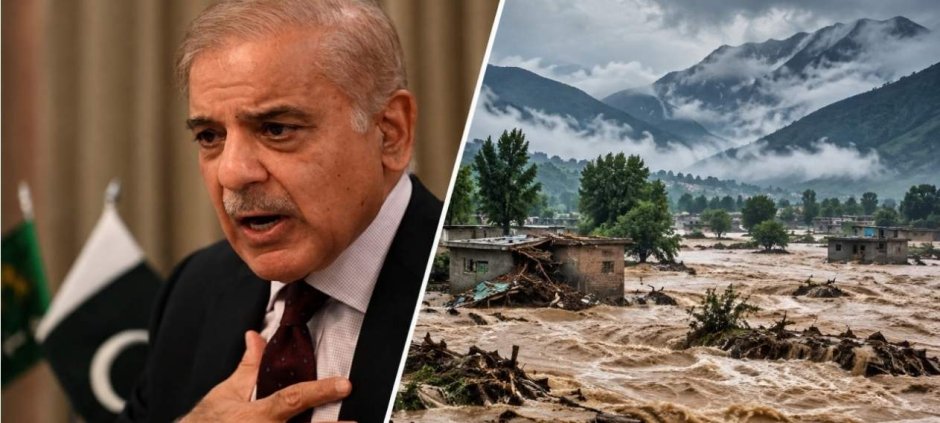
Pakistan remains among the countries most affected by climate change, with floods, landslides, smog and other natural disasters placing increasing pressure on its limited economic resources, Prime Minister Shehbaz Sharif said on October 8.
In a message marking the 21st National Day of Resilience, the prime minister highlighted Pakistan’s repeated exposure to natural disasters and paid tribute to those who lost their lives in the devastating October 8, 2005 earthquake.
Sharif said the country had repeatedly demonstrated resilience in the face of disasters and continued to work toward strengthening preparedness and response mechanisms.
Pakistan Faces Multiple Climate and Disaster Risks
Pakistan continues to face a wide range of natural and environmental challenges, including floods, earthquakes, landslides, epidemics and smog.
According to the prime minister, these disasters place additional pressure on the country’s economic resources, particularly when authorities have to respond to emergencies while also dealing with other development and financial priorities.
The effects of climate-related disasters can extend beyond immediate damage to homes and infrastructure. Floods and landslides can disrupt transportation, agriculture and livelihoods, while extreme weather events can increase pressure on public services and emergency response systems.
Sharif said Pakistan’s experience with repeated disasters had demonstrated the importance of improving preparedness and strengthening the country’s ability to respond quickly when emergencies occur.
National Day of Resilience
The prime minister’s message was issued on the 21st National Day of Resilience, which commemorates the devastating earthquake that struck Pakistan on October 8, 2005.
The earthquake caused widespread destruction and resulted in significant loss of life, particularly in parts of Khyber Pakhtunkhwa and Azad Jammu and Kashmir.
Sharif paid tribute to the victims and remembered the courage and sacrifices of Pakistanis who participated in relief and rescue efforts following the disaster.
He also highlighted the compassion and solidarity demonstrated by communities across the country during the aftermath of the earthquake.
The annual observance serves as a reminder of the importance of disaster preparedness and the need for coordinated emergency response.
Government Focuses on Disaster Preparedness
The government is working to improve coordination between provincial governments, public institutions, the private sector and civil society to strengthen disaster response.
Such coordination is considered important because major emergencies often require multiple institutions to work together, from rescue services and hospitals to local administrations and disaster management authorities.
The government aims to improve preparedness before disasters occur rather than relying solely on emergency response after an event has already taken place.
Better coordination can also help authorities distribute resources more efficiently and ensure that affected communities receive assistance more quickly during emergencies.
NDMA Using Modern Technology
The National Disaster Management Authority (NDMA) is being used by the government to incorporate modern technologies into Pakistan’s disaster response systems.
One of the key areas of focus is the development of more effective early warning systems.
Early warning mechanisms can provide authorities and communities with advance information about potential disasters, allowing them to take precautionary measures and prepare emergency responses.
The government is also emphasizing the use of reliable data and analysis to improve the accuracy and effectiveness of disaster warnings.
Improved information can help authorities identify risks earlier, coordinate evacuations where necessary and deploy emergency resources to areas expected to be affected.
Role of Rescue Services and Armed Forces
Sharif also praised the work of disaster management agencies, rescue services and the armed forces during emergencies.
These institutions frequently play important roles in rescue operations, evacuation efforts, relief distribution and other emergency activities following major disasters.
The prime minister said their efforts had contributed to the country’s ability to respond to difficult situations.
He also highlighted the role played by ordinary citizens, saying public solidarity and support remained an important part of Pakistan’s national character.
Community participation can be particularly important during major emergencies, when local residents are often among the first to assist people affected by floods, earthquakes or other disasters.
Climate Change Adds to Economic Pressure
Pakistan’s exposure to climate-related disasters presents challenges beyond immediate emergency response.
When floods, landslides and other disasters damage infrastructure or disrupt economic activity, governments may have to redirect resources toward reconstruction and relief.
For a country with limited economic resources, repeated disasters can create additional pressure on public finances and development priorities.
The prime minister’s remarks therefore underline the importance of building resilience and improving preparedness as Pakistan continues to face environmental and climate-related risks.
Need for Stronger Early Warning Systems
The government’s focus on early warning technology reflects the growing importance of preparedness in reducing the impact of disasters.
Reliable weather and environmental data can help authorities identify potential risks and communicate warnings to communities in vulnerable areas.
Early alerts can give people more time to move to safer locations, protect property and prepare essential supplies.
For Pakistan, strengthening these systems is particularly important because different regions face different risks, ranging from floods and landslides to extreme heat, smog and other environmental emergencies.
Pakistan’s Continued Resilience
Prime Minister Shehbaz Sharif said Pakistan had repeatedly demonstrated resilience despite facing natural disasters with limited resources.
The National Day of Resilience provides an opportunity to remember the victims of the 2005 earthquake while also highlighting the importance of preparing for future emergencies.
The government’s current approach focuses on stronger institutional coordination, modern technology, reliable data and improved early warning systems.
As Pakistan continues to face floods, landslides, smog and other natural and environmental threats, authorities are seeking to strengthen the country’s ability to prepare for, respond to and recover from disasters.
Also read: Pakistan and China Unite Against Climate Change Challenges