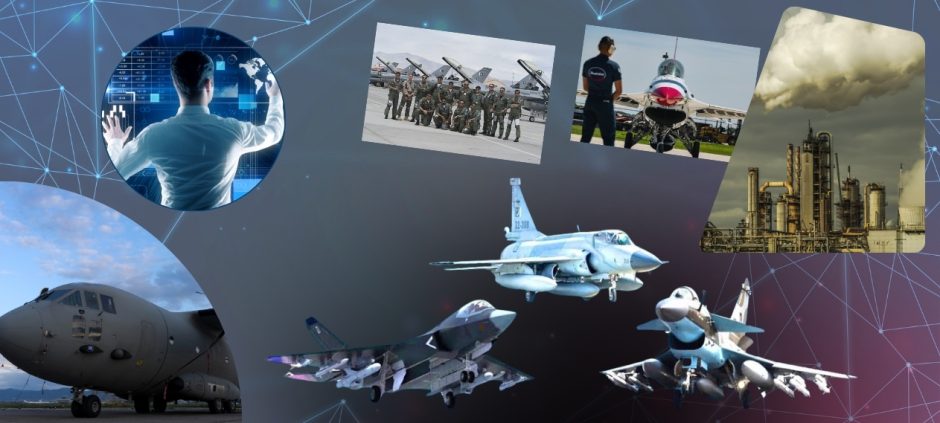
The United States has formally approved a $686 million technology and support package to upgrade the Pakistan Air Force’s F-16 fighter fleet. The decision, communicated via the US Defence Security Cooperation Agency (DSCA) to Congress, marks a significant step in renewing military cooperation between Washington and Islamabad. Analysts view the move as a strategic effort to modernise Pakistan’s aerial capabilities while ensuring operational interoperability with allied forces.
A Strategic Upgrade for Pakistan’s F-16s
The package covers advanced avionics, updated communication systems, cryptographic devices, and extensive personnel training. A key highlight is the provision of 92 Link-16 systems, enabling secure real-time data exchange between aircraft, command centres, and allied forces. Link-16, widely used by the US and NATO, allows seamless coordination, threat detection, and electronic countermeasure resistance.
Additionally, the deal includes six Mk-82 inert 500-pound bombs for weapons integration testing. These non-explosive bombs help ensure that F-16 systems are compatible with a range of munitions and software.
Beyond major defense equipment, the sale contains $649 million in non-MDE items, including updated hardware and software, precision navigation equipment, identification systems, simulators, spare parts, and maintenance tools. According to DSCA, the upgrades will extend the service life of Pakistan’s F-16 fleet through 2040, preserving operational readiness for decades to come.
Why the US Approved the Sale
The DSCA letter highlights that the sale aligns with US foreign policy and security goals. By providing these upgrades, Washington ensures that Pakistan can continue participating in joint counterterrorism operations and maintain interoperability with American and partner forces. The upgrades target both Block-52 and Mid-Life Upgrade F-16 variants, addressing flight safety concerns and modernisation needs.
Crucially, the letter emphasizes that the sale “will not alter the basic military balance in the region.” This is intended to reassure neighbouring countries and demonstrate that the package focuses on safety, operational reliability, and interoperability rather than escalating regional tensions.
Operational and Technical Enhancements
The F-16 package includes advanced systems that enhance combat and mission effectiveness:
- AN/APQ-10C Simple Key Loaders for secure data uploads
- AN/APX-126 IFF (Identification Friend or Foe) systems
- KY-58M and KIV-78 cryptographic modules for encrypted communications
- Joint Mission Planning Systems for mission coordination
- Hardware and software updates for avionics
- Precision navigation equipment
- Simulators and training programs for pilots and technical staff
These enhancements ensure the Pakistan Air Force can operate securely, share tactical information in real time, and counter electronic threats effectively.
Lockheed Martin and US Oversight
Lockheed Martin, the manufacturer of the F-16, will serve as the principal contractor, overseeing integration and technical implementation. US authorities confirmed that no additional personnel or deployment of American government staff to Pakistan is required. The sale is designed to preserve US defence readiness while allowing Pakistan to upgrade its fleet independently.
Impact on Pakistan: US Defence Relations
Pakistan first requested upgrades in 2021, but diplomatic tensions delayed progress. Recent engagement between Islamabad and Washington has revived cooperation, particularly in areas of counterterrorism and regional stability. Analysts interpret the approval as a signal of renewed trust and a stabilizing factor in US–Pakistan military relations.
Regional and Strategic Implications
The upgraded F-16 fleet reinforces Pakistan’s aerial deterrence, especially after the May 2025 aerial confrontation with India. During the conflict, Pakistan claimed it shot down multiple Indian aircraft, demonstrating the strategic importance of maintaining a capable air force. While the exact numbers remain disputed, the event highlighted the F-16’s role in precision strike and air defence operations.
Alongside the F-16, Pakistan continues to develop its indigenous and joint platforms. The JF-17 Thunder, co-developed with China, has become the backbone of the Pakistan Air Force, supporting a range of missions from air defence to reconnaissance. The recent MoU with a friendly country to export JF-17s at the Dubai Airshow underscores Islamabad’s broader vision of expanding defence capabilities and partnerships.
The F-16 upgrades complement these developments by ensuring Pakistan retains Western technology while balancing regional and global partnerships. Analysts believe this combination strengthens Pakistan’s overall air strategy, providing flexibility and operational depth across multiple platforms.
Long-Term Benefits for the PAF
The package promises multiple long-term advantages:
- Extended Aircraft Lifespan – F-16s remain operational until 2040.
- Enhanced Operational Safety – Upgrades address critical flight-safety concerns.
- Improved Interoperability – Seamless integration with US and allied forces.
- Strengthened Tactical Capabilities – Advanced avionics, navigation, and communication systems enhance mission effectiveness.
- Cost Efficiency – Updated hardware and software reduce the need for future replacements or retrofits.
These improvements ensure that the Pakistan Air Force remains a credible deterrent and maintains strategic flexibility in a complex regional security environment.
Looking Ahead
While US approval marks a major milestone, delivery and integration will take time. Congress retains the authority to review the deal, but analysts expect smooth implementation. Once completed, Pakistan’s F-16 fleet will be safer, more capable, and better integrated with allied forces.
The move also signals a strategic recalibration for Pakistan’s air power. Combining the upgraded F-16s with JF-17s and other platforms allows the Pakistan Air Force to pursue a next-generation air strategy, balancing legacy systems with modern technology and regional threats.