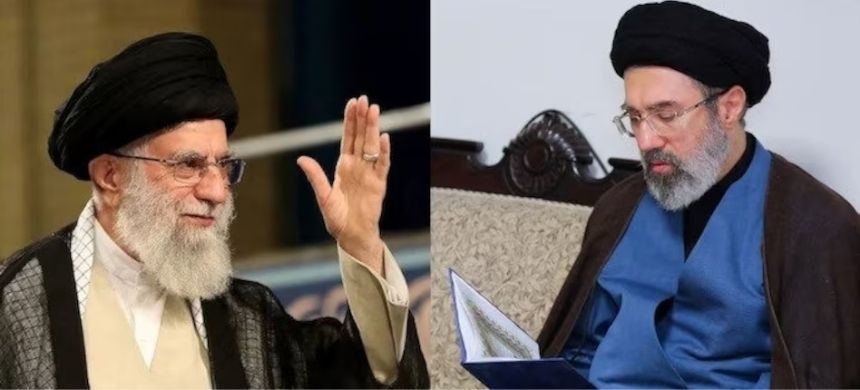
TEHRAN – Reports suggest that Iran’s influential clerical establishment has selected Mojtaba Khamenei as the successor to his father following the death of long-serving Supreme Leader Ayatollah Ali Khamenei. However, the claims have not been officially confirmed by state media, leaving uncertainty over the country’s political future.
If confirmed, the appointment of Mojtaba Khamenei would represent a major transformation in Iran’s leadership structure. Traditionally, the succession of a Supreme Leader has involved senior clerical consensus within the religious hierarchy. This time, however, reports indicate that the process may have unfolded under significant influence from the Islamic Revolutionary Guard Corps (IRGC), pointing to a potentially stronger connection between Iran’s security institutions and its political authority.
At 56, Mojtaba Khamenei has long been viewed as a possible candidate for the country’s most powerful role. Although he holds the rank of a mid-level cleric, he has maintained considerable influence behind the scenes for years. He previously oversaw key affairs within his father’s office and is believed to have played an active role in political coordination. In addition, he reportedly served during the Iran-Iraq War, further strengthening his ties with military circles.
His close relationship with elements of the IRGC has fueled speculation that influential factions within Iran’s security establishment may back his leadership. Such support could reshape the balance of power within the Islamic Republic.
The position of Supreme Leader carries sweeping authority, including control over the armed forces and decisive influence over Iran’s domestic and foreign policies. If Mojtaba Khamenei formally assumes the role, it could spark widespread debate at home and abroad regarding the future direction of Iran’s theocratic governance and the increasing prominence of military-linked elites in state affairs.