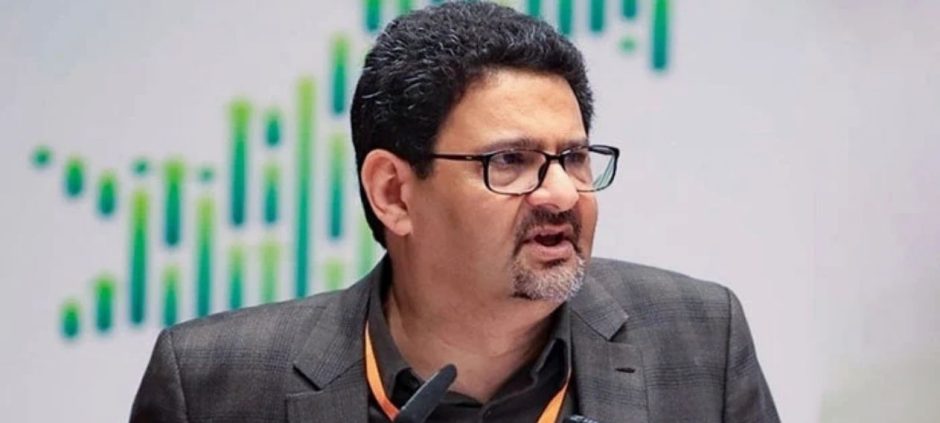
Former finance minister and Awaam Pakistan Party Secretary General Miftah Ismail has claimed that the actual cost of petrol reaches around Rs. 220 per litre by the time it arrives at Karachi Port, arguing that the remaining retail price paid by consumers mainly consists of government taxes and the profit margins of oil marketing companies (OMCs).
Speaking on ARY News’ program Sawal Yeh Hai, Ismail said the Rs. 220 per litre estimate includes the import price, freight charges, and other duties incurred before the fuel reaches Pakistan. According to him, the amount charged to consumers above that level is largely made up of petroleum-related taxes and margins retained by OMCs and other stakeholders in the fuel supply chain.
The former finance minister alleged that successive governments have prioritized protecting the profit margins of oil marketing companies while placing an increasing tax burden on ordinary consumers. He argued that although international oil prices fluctuate, the government often relies on petroleum-related taxes to generate revenue, resulting in consistently high retail fuel prices.
Ismail also questioned proposals to provide relief specifically to motorcycle riders by lowering petrol prices for them. According to him, such suggestions are frequently dismissed because of concerns related to Pakistan’s commitments under its International Monetary Fund (IMF) program. He claimed that policymakers often cite IMF conditions when rejecting measures aimed at reducing the financial burden on consumers.
Highlighting the impact of fuel prices on the public, Ismail claimed that nearly 60 percent of the country’s petrol is consumed by motorcycle riders. He argued that these consumers, many of whom belong to low- and middle-income households, are effectively paying around Rs. 120 per litre in taxes. According to him, imposing such a heavy tax burden on fuel significantly increases transportation costs, which ultimately contributes to inflation and raises the overall cost of living across the country.
The former finance minister also criticized the government’s recent decision to introduce daily petroleum price revisions. He argued that simply changing the frequency of price adjustments does not amount to genuine deregulation of the petroleum sector. In his view, true deregulation would allow market forces to determine prices based on supply and demand rather than government intervention.
Ismail further alleged that the government recently increased petrol prices in the middle of an existing pricing period, despite previously announced rates being scheduled to remain in effect until the middle of the month. He claimed that this move primarily benefited oil companies while consumers were left paying higher prices without receiving any corresponding relief.
The comments come at a time when fuel prices remain a major concern for households and businesses across Pakistan. Rising petroleum prices directly affect transportation costs, industrial production, and the prices of essential goods, making fuel pricing one of the most closely watched economic issues in the country.
Separately, the Petroleum Division has announced that petroleum prices will remain unchanged until July 27. Under the current pricing structure, petrol will continue to be sold at Rs. 335.18 per litre, while the price of high-speed diesel will remain Rs. 383.46 per litre for Sunday and Monday.
The government has not officially responded to Miftah Ismail’s claims regarding the breakdown of petrol prices or his criticism of the current pricing mechanism. Fuel prices in Pakistan are reviewed periodically based on international oil prices, exchange rate movements, taxation policies, and recommendations from the relevant authorities.
Also read: Miftah Denies Rumors About Joining PPP