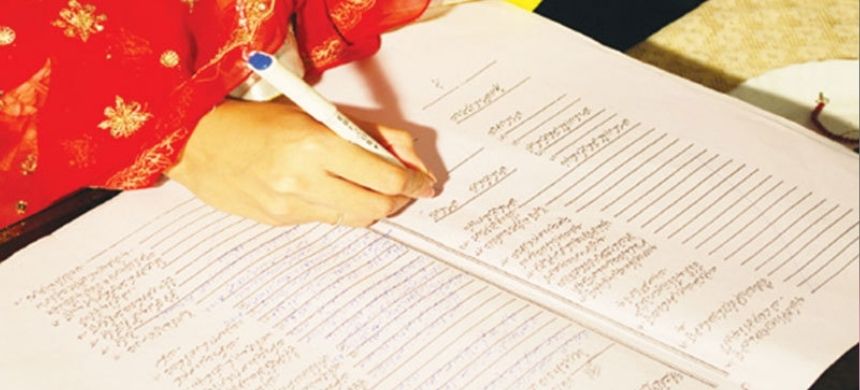
The Lahore High Court (LHC) has reaffirmed a woman’s legal right to receive property promised by her husband through a separate agreement, ruling that such commitments are enforceable in addition to the dower (haq mehr) mentioned in the marriage contract.
The decision came in a case where a husband challenged a trial court order directing him to transfer a five-marla house to his wife. The property had been promised in a separate written agreement signed on the day of their marriage. However, the LHC dismissed the petition and upheld the lower court’s ruling.
In its detailed judgment, Justice Muhammad Sajid Mehmood Sethi observed that the promise made to the woman was legally binding and could not be disregarded simply because it was not included in the nikahnama. The court held that the husband had voluntarily committed to providing the property and was therefore obligated to honour that agreement.
The judgment also emphasized that a woman’s entitlement to dower is a protected legal right under both Islamic principles and Pakistani law. The court noted that haq mehr is not a gift or favour granted by a husband but a debt that remains payable to the wife.
Justice Sethi further stated that a woman does not lose her right to dower merely because she does not demand it during marriage. The court acknowledged that many women face social and family pressures that may prevent them from asserting their financial rights while living with their spouses.
The ruling explained that dower can be determined verbally, in writing, or even after marriage, and may be increased by mutual agreement. The court stressed that family disputes should be decided with consideration of both legal requirements and social realities.
The judgment strengthens protections for every woman by confirming that financial promises made at the time of marriage, whether included in the nikahnama or recorded separately, remain legally enforceable and must be fulfilled.
Also Read: Karachi Woman Reportedly Delivers Baby in Hospital Washroom