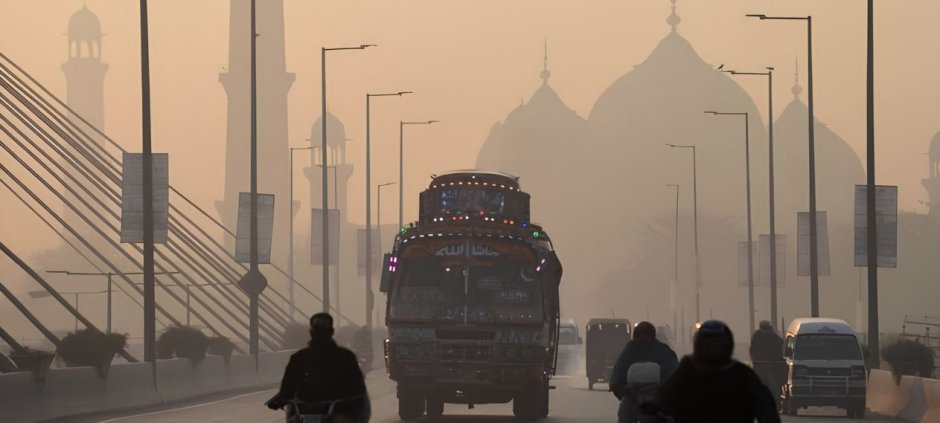
Lahore once again topped the global ranking of the most polluted major cities on Wednesday, October 28, as worsening smog and colder morning conditions raised concerns about public health and deteriorating air quality across Punjab.
According to Swiss air quality monitoring platform IQAir, Lahore recorded an Air Quality Index (AQI) of 296 at 10am, placing it ahead of several other heavily polluted cities worldwide. The reading fell within the “very unhealthy” category under the US AQI scale, indicating potentially serious health risks, particularly for vulnerable groups.
The worsening conditions have renewed concerns about Pakistan’s recurring winter smog crisis, which continues to affect Lahore and other urban areas every year.
Lahore Tops Global Air Pollution Ranking
IQAir’s live ranking placed Lahore at the top of the world’s most polluted major cities on Wednesday morning.
Cairo, Egypt, ranked second with an AQI of 289, followed by New Delhi, India, with a reading of 272. Tashkent stood fourth with an AQI of 186, while Karachi ranked fifth at 173.
The readings showed that Lahore and Cairo were experiencing very unhealthy air quality, while Delhi also remained in the same category.
However, the global ranking is based on live monitoring data, meaning both AQI readings and city positions can change throughout the day as conditions and measurements are updated.
An AQI of 296 indicates a high level of pollution that can affect people’s health, especially children, older adults, and individuals with asthma, heart disease or other respiratory conditions.
The thick smog also reduced visibility in parts of Lahore during the early morning, creating additional concerns for commuters and road users.
What Is Making Lahore’s Smog Worse?
Air pollution has become one of Pakistan’s most pressing environmental and public health challenges. Lahore is particularly affected during the colder months, when emissions and atmospheric conditions can combine to keep polluted air concentrated over the city.
Major contributors include industrial emissions, vehicle exhaust, construction and development activities, agricultural stubble burning and the movement of polluted air across regional borders.
According to Environment Protection Agency (EPA) spokesperson Sajid Bashir, changing weather conditions were contributing to the worsening smog situation.
Speaking to Dawn, Bashir said authorities were monitoring industrial activity and had installed equipment to record pollution levels. He added that efforts were underway to discourage stubble burning and reduce pollution from other sources.
The spokesperson also said easterly winds had been carrying polluted air from areas near the Indian border towards Lahore, aggravating conditions across central Punjab.
These factors underline the complexity of the smog problem, which requires sustained action on local emissions as well as cooperation to address pollution that moves across regional boundaries.
Punjab Government Plans More Fog Cannons
The Punjab government is procuring and installing 30 additional modern fog cannons mounted on electric trucks to support its efforts to control severe smog and air pollution.
According to Bashir, anti-smog guns were being deployed on a priority basis in areas where higher pollution readings had been recorded.
The equipment is being used to suppress dust on roads and surrounding areas, particularly at locations reporting elevated levels of PM10, or particulate matter with a diameter of 10 micrometres or less.
Construction and development activities were also contributing to pollution in Lahore and other cities across Punjab, the spokesperson said.
Dust suppression may help reduce certain forms of airborne dust in targeted areas, but tackling the wider smog crisis also requires measures addressing vehicle emissions, industrial pollution, agricultural burning and other major sources.
Authorities Intensify Industrial Monitoring
Punjab Climate Watch teams are working in three shifts to monitor industrial activity in Lahore, according to the EPA spokesperson.
The teams are inspecting industrial units, identifying reported violations, registering cases and imposing fines where necessary.
Authorities are also monitoring pollution levels to identify areas requiring priority action.
Bashir acknowledged that efforts to combat smog would take time, highlighting the need for consistent enforcement and long-term environmental measures rather than relying solely on short-term interventions.
The city’s latest ranking follows several days of fluctuating air quality. Lahore also ranked as the world’s most polluted major city on October 23, when its AQI reached 410, a reading classified as “hazardous” under the US AQI scale.
Earlier, on October 2, Lahore topped IQAir’s ranking with an AQI of 167, which fell within the “unhealthy” category.
A separate analysis released by the European Union’s Copernicus Atmosphere Monitoring Service on October 1 also placed Lahore among cities with extremely poor ozone conditions.
The repeated episodes illustrate the scale of Lahore’s air pollution challenge as the winter smog season approaches.
Residents Advised to Take Precautions
With Lahore’s AQI reaching 296 on Wednesday morning, residents were advised to limit prolonged outdoor exertion while pollution levels remained high.
Children, older adults and people with respiratory or cardiovascular conditions should take particular care during periods of very unhealthy air quality.
Residents can reduce exposure by avoiding strenuous outdoor exercise, checking updated air quality readings before travelling and keeping windows closed when outdoor pollution is severe, where practical.
A well-fitting particulate-filtering mask, such as a suitable N95 or equivalent, can help reduce exposure when worn correctly outdoors. Indoor air filtration may also help lower exposure to fine particles.
People experiencing significant breathing difficulties, chest pain or worsening respiratory symptoms should seek medical advice promptly.
As Lahore once again leads the global pollution ranking, the situation highlights the need for stronger pollution controls, effective enforcement and sustained public awareness. While fog cannons and monitoring operations form part of the response, lasting improvements will depend on reducing pollution at its sources.
Also read: Lahore Tops Global Pollution Rankings as Smog Worsens