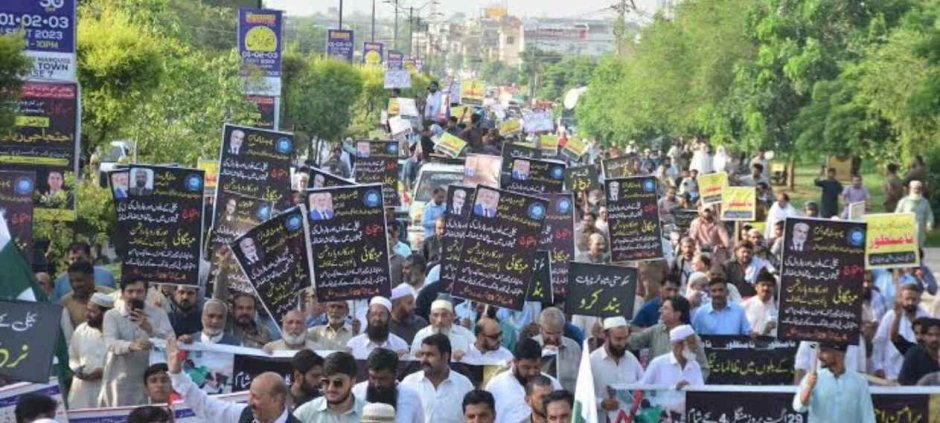
The Traders’ Association Rawalpindi has rejected the newly introduced sanitation tax under Punjab’s Suthra Punjab programme, warning that the business community could launch protests if the provincial government refuses to withdraw the additional charges.
The traders raised their objections during a press conference at the Rawalpindi Press Club on Tuesday, October 27, arguing that shopkeepers and business owners already pay property taxes, Water and Sanitation Agency (WASA) bills and various other government levies.
Malik Shahid Ghafoor Paracha, president of Markazi Anjuman Tajiran Rawalpindi, questioned the need for a separate sanitation charge when businesses are already dealing with rising operating expenses and multiple existing payments.
He urged the Punjab government to review the current taxation system and explain why traders must pay additional fees for sanitation services.
Traders Question Need for Separate Sanitation Charges
Addressing the press conference, Paracha said the government should avoid placing further financial pressure on businesses that are already struggling with inflation, expensive electricity and gas, taxes and other operational costs.
He questioned whether existing property taxes and WASA bills already cover municipal or sanitation-related services and demanded an explanation of the legal basis and scope of the new levy.
According to the traders, businesses need clear information about which services are covered by their existing payments and which services will be financed through the new Suthra Punjab sanitation fee.
They argued that introducing separate bills without clearly explaining the distinction between existing charges and the new levy could create concerns about overlapping payments.
The association maintained that the government should first review the current system and determine whether any duplication exists before imposing additional financial obligations on the business community.
Monthly Charges Raise Concerns Among Shopkeepers
Under the sanitation fee structure reported for urban commercial premises in Punjab, monthly charges are set according to business size.
According to reporting by The Express Tribune and Dawn, the announced rates for urban commercial premises are:
- Small businesses: Rs500 per month.
- Medium-sized businesses: Rs1,000 per month.
- Large commercial businesses: Rs3,000 per month.
The applicable amount depends on the category assigned to a commercial property. The charges form part of the wider provincial effort to finance waste collection and sanitation services under the Suthra Punjab programme.
For small shopkeepers operating on limited margins, the additional monthly payment can increase annual business expenses. Traders say this comes at a time when utility bills, taxation and other costs are already placing pressure on commercial activity.
The association warned that the new levy could disproportionately affect small businesses, which may have less financial flexibility than larger commercial establishments.
Traders Demand Transparency and Government Review
Association General Secretary Raja Tauheed Ahmed also called on the Punjab government to review existing levies and provide greater transparency before continuing with the additional sanitation charges.
He said the government should protect the interests of the business community and examine the financial burden created by multiple taxes and service fees.
Other traders attending the press conference supported the demand for a review of the new charges. They said the government must clearly identify the services covered by property taxes, WASA bills and the separate sanitation fee.
The traders stressed that issuing bills through different departments does not, by itself, resolve their concerns about whether charges cover distinct services.
They demanded that the government clarify the purpose of the new levy and explain how the collected money will support sanitation operations.
The association also called for a comprehensive review of existing payments before any additional financial burden is imposed on commercial establishments.
Suthra Punjab Sanitation Fee Collection System
The Punjab government has introduced a province-wide mechanism to collect sanitation fees from residential and commercial properties under the Suthra Punjab programme.
In September, the provincial government authorised the Excise, Taxation and Narcotics Control Department to collect the charges alongside property tax during the 2026–27 financial year. The mechanism is intended to establish a more uniform collection system across urban areas.
The announced commercial rates range from Rs500 per month for small businesses to Rs3,000 for large commercial premises. Residential charges vary according to property size and location.
The programme aims to support waste collection and sanitation services, while the government’s collection mechanism is designed to centralise billing and revenue recovery.
However, the introduction of the fee has prompted concerns among business representatives, particularly over the additional costs faced by traders and the need to clarify how the new charges relate to existing taxes and service bills.
The Rawalpindi Chamber of Commerce and Industry also raised concerns about the sanitation fee and property tax amendments earlier in October, highlighting the financial pressure on businesses from energy costs, utilities and other expenses.
Protest Warning Adds Pressure on Punjab Government
The Traders’ Association Rawalpindi has demanded the withdrawal of the additional sanitation levy, warning that protests may follow if the government does not address its concerns.
The association said traders support effective sanitation arrangements and want cleaner commercial areas. However, they argued that the government must explain the charges and provide transparency regarding the services being financed before expecting businesses to accept another levy.
The dispute places the provincial government under pressure to address concerns about the cost of doing business while continuing its efforts to finance waste management and sanitation services.
A clear explanation of the fee structure, the services covered and the relationship between existing payments and the new charges could help address some of the concerns raised by the traders.
As of October 28, 2026, the traders’ association had demanded withdrawal of the levy and warned of protests, but no government decision to withdraw the sanitation tax had been reported in the source reports.
Also read: Rawalpindi Traders Demand Parking Before New Commercial Plazas