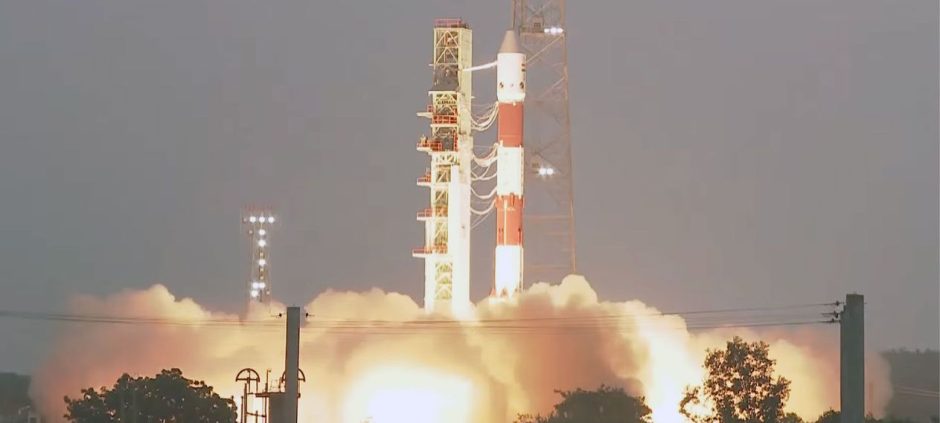
The Indian Space Research Organization (ISRO) suffered a setback on Monday as an Indian rocket launch loses control shortly after liftoff. The rocket, carrying 16 payloads, went off track, raising concerns over its reliability.
The PSLV-C62 lifted off from the Satish Dhawan Space Centre at 10:18 a.m., carrying the EOS-N1 observation satellite and 15 additional payloads from startups and academic institutions in India and abroad. The rocket performed normally for most of its flight. However, a disturbance during the end of the PS3 stage caused it to deviate from its intended trajectory.
ISRO confirmed the anomaly in a statement, saying a detailed investigation has been launched. Officials have not disclosed the exact cause or the final status of the rocket and its payloads.
This is the second significant issue for the Polar Satellite Launch Vehicle (PSLV) in less than eight months. The PSLV has been a cornerstone of India’s space program, known for launching missions like Chandrayaan-1 and the Aditya-L1 solar observatory. It has also played a key role in enabling private industry to participate in space missions.
Experts say that while the PSLV has maintained a success rate of over 90 percent in more than 60 missions, repeated anomalies can affect confidence in the workhorse launch vehicle. ISRO engineers are reviewing telemetry and flight data to determine what caused the deviation.
The EOS-N1 satellite and other payloads onboard were intended for earth observation, scientific research, and technological experiments. If recovery or compensation measures are not implemented, these payloads could face significant delays. ISRO’s latest setback with the Indian rocket launch highlights challenges in satellite missions. For related updates, see India Faces Setback After Earth-Observation Satellite Launch Failure.
Despite the setback, ISRO remains committed to its space exploration plans and continues to support private sector involvement in satellite launches. The agency has assured that the anomaly will not impact its ongoing projects but will lead to stricter review protocols for future missions.
This incident comes as India expands its ambitions in space technology, aiming for more frequent satellite launches and international collaborations. Authorities emphasized that lessons learned from the current failure will improve the safety and reliability of upcoming missions