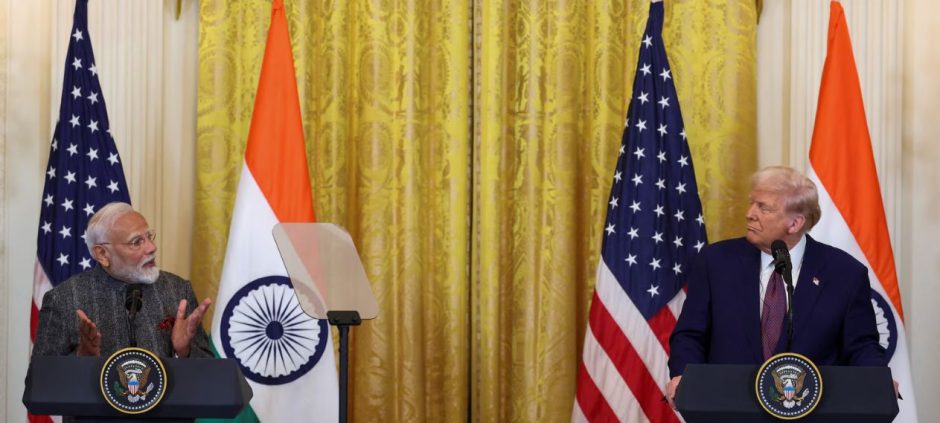
The highly anticipated India-US trade deal has been postponed after Prime Minister Narendra Modi did not make a key phone call to President Donald Trump, US Commerce Secretary Howard Lutnick said on Friday.
The delay comes after trade negotiations last year broke down, prompting Trump to raise tariffs on Indian goods to 50 percent in August. This includes a 25 percent levy linked to India’s purchase of Russian oil.
Lutnick explained in an interview on the All-In podcast that the deal was ready to be finalized, but a call from Modi to Trump was necessary. “So, Modi didn’t call,” he said, highlighting a communication gap as the main reason for the stalled India-US trade deal.
Trump recently increased pressure on India, warning that tariffs could rise further if the country continued importing Russian oil. This warning caused the Indian rupee to fall to a record low, alarming investors and businesses awaiting a resolution in trade negotiations.
India is seeking a mid-range tariff rate that would be fair compared to the offers previously made to Britain and Vietnam. However, Lutnick said that the previous offer has now expired.
An Indian government official involved in the talks told Reuters that Modi did not make the call to avoid a one-sided conversation that could place him in a difficult position. New Delhi’s trade ministry did not immediately respond to requests for comment on Lutnick’s statements.
Analysts say the postponement of the India-US trade deal highlights the challenges of bilateral trade negotiations and the role of leadership communication in finalizing major agreements. Both countries remain committed to resuming talks, but timing and strategic communication will be crucial.
Investors are closely watching the situation as further delays could affect trade flows and the Indian economy. Meanwhile, Indian officials are exploring options to reopen negotiations and find a mutually acceptable tariff rate that addresses both countries’ concerns.
The stalled deal underlines the complexities of international trade agreements, where even minor communication gaps between leaders can have significant economic consequences.
The US government is advancing a historic $1.5 trillion military budget, signaling major defense investments. Read more about related international economic and policy developments in Trump Pushes Historic $1.5 Trillion Military Budget—Will Congress Agree?