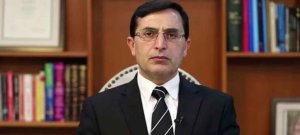
Former Finance Ministry economic adviser Dr. Ashfaque Hassan Khan has raised concerns about further depreciation of the Pakistani rupee.
He claimed that the IMF wants Pakistan to weaken the rupee further.
According to Ashfaque, this could increase fuel prices and worsen inflation.
He said higher inflation could pressure the State Bank of Pakistan to raise interest rates.
Speaking to a private news channel, Ashfaque discussed the current foreign exchange situation.
He estimated that the rupee could trade near Rs. 235 against the US dollar.
He said this rate could be possible without intervention from the central bank.
The rupee is currently trading around Rs. 277 to Rs. 278 against the dollar.
Ashfaque argued that there is currently an excess supply of dollars.
He said the rupee could appreciate significantly if the central bank stopped buying dollars.
According to him, the existing exchange rate is being managed through market intervention.
The former adviser also estimated the long-term cost of currency depreciation.
He said currency devaluation and high interest rates have created major economic costs.
Ashfaque estimated their combined cost at around $148 billion over five years.
He also warned about the impact of a weaker rupee on imported fuel.
Pakistan pays for international oil in foreign currency.
A weaker rupee increases the local cost of imported oil.
This can result in higher domestic petrol and diesel prices.
Higher fuel prices can then increase transportation and production costs.
These additional costs can put further pressure on consumer inflation.
Ashfaque said rising inflation could create pressure for higher interest rates.
The SBP could therefore face greater pressure to maintain or increase borrowing costs.
He also questioned whether currency depreciation automatically increases Pakistan’s exports.
According to Ashfaque, Pakistan’s export performance does not fully support that assumption.
He noted that exports reached around $32 billion during 2018-19.
At that time, the Pakistani rupee was significantly stronger against the dollar.
The currency later weakened substantially, reaching around Rs. 307 per dollar.
However, Ashfaque said exports did not increase significantly despite the depreciation.
He argued that a weaker currency alone cannot guarantee stronger export growth.
Other economic factors also influence the competitiveness of Pakistani exporters.
The IMF has remained involved in Pakistan’s economic reform and financing programs.
Ashfaque’s comments come amid continued debate over exchange rate policy.
He also called for stronger measures to control unnecessary imports.
He suggested selective and aggressive import compression to protect the balance of payments.
According to him, Pakistan should restrict large-scale imports of luxury vehicles.
He also recommended limiting other expensive imported goods.
Such measures should remain in place until the balance of payments position improves.
Ashfaque said controlling imports could reduce pressure on Pakistan’s foreign exchange resources.
The debate highlights the difficult balance between currency stability, inflation and economic growth.
Further rupee depreciation could affect fuel costs and monetary policy.
At the same time, policymakers must consider the impact on exports and imports.
The IMF’s role in Pakistan’s economic policy continues to attract significant attention.
In other related news also read IMF Pushes Pakistan to Complete Delayed SOE Reforms
The government and central bank will need to balance these competing economic pressures.