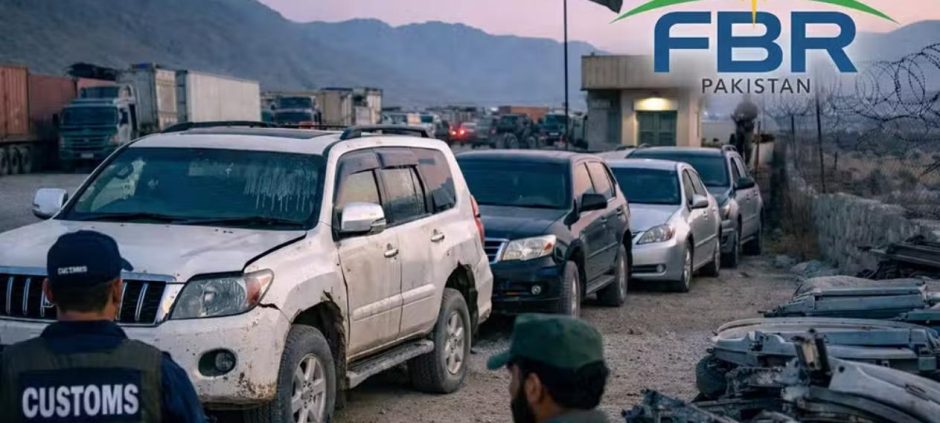
The FBR has approved a new operational policy allowing the use of tampered vehicles above 1800 cc for enforcement and anti-smuggling operations. The decision will come into effect from April 2026.
According to Customs General Order (CGO) 4 of 2026, issued by the FBR, these vehicles can now be used by Anti-Smuggling and Enforcement formations. The policy also extends to select Appraisement formations in hard and border areas.
The FBR stated that vehicles above 1800 cc may also be authorized for Chief Collector formations in Balochistan. These include Gwadar, Gabd (Border Point 250), Mand, Panjgur, Taftan, Katagar, Dalbandin, and Chaman.
In Khyber Pakhtunkhwa, the policy applies to key border and transit locations. These include Angoor Ada, Ghulam Khan, Kharlachi, Torkham, Gilgit, and Sost. It also covers Transit Trade formations and other designated hard areas.
The FBR has introduced a structured system to regulate confiscated vehicles with tampered or cut-and-weld chassis numbers. These vehicles will now be managed under a uniform disposal procedure to ensure transparency and control.
Under the new framework, only specific institutions will be eligible to purchase such vehicles. These include government departments, semi-government departments, and government-owned institutions in education, health, and scientific sectors.
The FBR has clearly prohibited the sale of tampered vehicles to private individuals. No vehicle in this category will be allowed for personal ownership under any circumstances.
Officials said the aim is to ensure proper handling of confiscated assets. It will also prevent misuse and promote accountability in disposal processes.
The sale and allocation process will follow a defined procedure issued by the FBR. Authorities emphasized that transparency will be maintained at all stages.
The policy is also intended to support enforcement operations in difficult terrain. Many border regions require strong and reliable vehicles for anti-smuggling activities.
Officials believe the move will improve operational efficiency in remote areas. It will also help strengthen customs enforcement capacity across high-risk zones.
The FBR has stated that the new framework is part of broader reforms. These reforms aim to improve governance, enforcement, and asset management systems across the country.
In other related news also read FBR Updates Property Valuation Rates for Islamabad
Overall, the policy reflects a more structured approach by the FBR toward vehicle usage and disposal. It focuses on transparency, efficiency, and stronger enforcement in border regions.