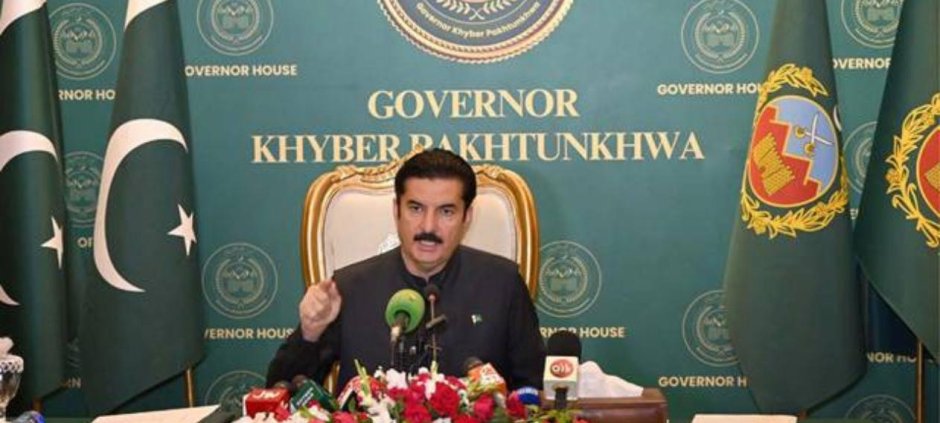
Khyber Pakhtunkhwa Governor Faisal Karim Kundi has said that the people of the province must have the first right to its natural resources, assuring residents that no outside party will be allowed to exploit them without considering local interests.
Addressing a ceremony in Peshawar, Kundi said the people of Khyber Pakhtunkhwa should remain the primary beneficiaries of the province’s mineral wealth and other natural resources.
“Till I am here, the people of the province will have the first right to its resources,” he said, adding that no one should assume that outsiders would be allowed to come and take advantage of the province’s resources.
The governor clarified that investors and companies from outside the province, whether Pakistani or foreign, could participate in joint ventures with local people. His remarks come amid a growing political debate over the future management of KP’s natural resources following the imposition of governor’s rule and an emergency in the province.
Kundi Says Local Communities Must Benefit First
During his address, Governor Kundi emphasised that protecting the interests of the people of Khyber Pakhtunkhwa would remain a priority.
He said outside investors could participate in development projects through joint ventures with local communities, indicating that investment from other parts of Pakistan and abroad was not being ruled out.
However, he stressed that such participation should involve the people of the province rather than allow external parties to take control of its resources without local benefit.
The governor’s comments reflect the importance of balancing investment opportunities with the economic interests of communities living in resource-rich areas.
Natural resources can create opportunities for employment, infrastructure development and government revenue. However, questions about ownership, investment terms, local participation and the distribution of financial benefits often become important during major extraction projects.
Kundi’s statement placed local participation at the centre of the discussion, while leaving open the possibility of cooperation with outside companies.
Also read: KP Governor’s Rule: What Happens Next?
Governor Highlights KP’s Oil, Gas and Mineral Wealth
Kundi also discussed the range of natural resources available in Khyber Pakhtunkhwa, describing the province as one of Pakistan’s resource-rich regions.
He referred to its oil and gas production, electricity generation potential, tourism opportunities, mineral deposits and tobacco industry.
The governor claimed that KP was Pakistan’s largest oil-producing province and its second-largest gas producer. These production rankings were presented as part of his remarks at the ceremony.
He also highlighted the province’s electricity production capacity and mineral wealth, arguing that its resources could contribute significantly to economic development.
Khyber Pakhtunkhwa has several areas with oil, gas and mineral deposits, making the management of natural resources an important economic and policy issue.
The province’s potential also extends beyond extractive industries. Tourism, hydropower, agriculture and local manufacturing offer additional opportunities for investment and employment.
However, turning these resources into wider economic benefits requires investment, infrastructure, transparent agreements and effective safeguards for local communities.
Governor’s Rule Brings Resource Management Into Focus
Kundi’s remarks come after the federal government imposed governor’s rule and an emergency in Khyber Pakhtunkhwa in October 2026.
Under the arrangement, the governor assumed the functions of the provincial government and was assigned an advisory council to assist in managing provincial affairs.
The measures followed a dispute between the federal government and the provincial administration over security and counterterrorism efforts.
The federal government cited concerns about law and order and the provincial administration’s handling of militancy as reasons for the decision. The move was opposed by PTI and other political figures, who questioned its justification and implications for provincial authority.
The change in administrative control has also brought attention to the question of who will oversee important provincial decisions, including those involving natural resources and potential investment projects.
Kundi’s latest remarks appear aimed at reassuring residents that the province’s economic interests will remain a priority under the current administrative arrangement.
Also read: KP Governor’s Rule: What Happens Next?
Fazlur Rehman Raises Concerns Over KP’s Mineral Resources
The debate over natural resources intensified after Jamiat Ulema-i-Islam-Fazl (JUI-F) chief Maulana Fazlur Rehman alleged that the imposition of governor’s rule and emergency in KP was linked to an attempt to gain control over the province’s mineral resources.
Fazlur Rehman questioned the government’s intentions and argued that the measures could affect the province’s authority over its natural wealth.
He also raised the matter during a National Assembly session, calling for greater clarity about the government’s plans and the future management of mineral resources.
The JUI-F chief’s comments added a new dimension to the political disagreement surrounding the federal government’s decision to impose governor’s rule.
The allegations have not been established as fact, and the government has rejected the suggestion that the measures were introduced to take control of KP’s minerals.
Federal Government Rejects Allegations of Resource Takeover
Minister for Parliamentary Affairs Tariq Fazal Chaudhry rejected allegations that governor’s rule had been imposed to seize Khyber Pakhtunkhwa’s mineral resources.
Speaking in the National Assembly on October 28, he said the government’s decision was related to security concerns and not an attempt to take control of the province’s natural wealth.
He also rejected claims that the United States was seeking to take over mineral resources in KP and Balochistan.
Chaudhry referred to comments by US Chargé d’Affaires in Pakistan Natalie Baker, saying she had discussed the possibility of American companies assisting Pakistan in developing its mineral resources.
According to the minister, such cooperation should not be interpreted as an attempt to take ownership of Pakistan’s natural wealth.
His response followed the concerns raised by opposition leaders over foreign investment and the future of mineral development projects in the country.
Kundi Says Protection of People Comes First
The KP governor also outlined his priorities while addressing the gathering, saying that protecting the people of the province would come before other considerations.
He stated that the protection of residents was his first priority, followed by the protection of the province and then Pakistan.
His remarks connected the resource debate with the broader responsibility of maintaining security and stability in Khyber Pakhtunkhwa.
The province has faced persistent security challenges, particularly in areas bordering Afghanistan. The federal government has cited these concerns in explaining its decision to impose emergency measures and governor’s rule.
At the same time, questions surrounding political authority, local representation and the management of natural resources remain part of the wider debate.
What Kundi’s Statement Could Mean for Future Investment
Kundi’s statement suggests that the current provincial administration is open to investment partnerships while insisting that local communities should be involved in resource development.
Joint ventures involving local people, Pakistani businesses and foreign companies could provide opportunities to develop mineral deposits and other industries.
However, the practical impact will depend on how such partnerships are structured, who receives the financial benefits and what protections are provided to communities in resource-producing areas.
Transparent agreements, clear ownership arrangements, environmental safeguards and local employment opportunities will remain important factors in determining whether investment projects benefit residents.
For now, the governor has publicly stated that the people of Khyber Pakhtunkhwa must have the first right to the province’s resources. His remarks come as political leaders continue to debate the reasons behind governor’s rule and the future of resource management in the province.
The government’s next steps on mineral development and investment agreements will be important in showing how the stated commitment to local interests will be implemented.