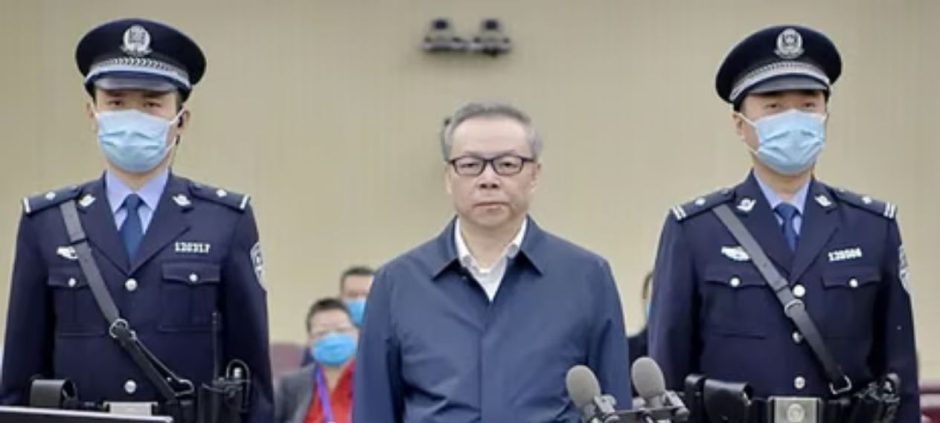
China has executed Bai Tianhui, a former senior banker, after he was found guilty of taking bribes exceeding $156 million during his tenure at China Huarong International Holdings (CHIH), a subsidiary of the state-controlled Huarong Asset Management.
Bai served as general manager of CHIH, using his influential position to secure favorable deals and project approvals in exchange for massive illicit payments.
Between 2014 and 2018, Bai allegedly accepted large sums from corporations and individuals seeking preferential treatment in financial transactions, corporate financing, and other high-value deals.
Authorities described the crime as “especially serious,” noting the significant damage inflicted on state assets and public interests due to his actions.
The Tianjin court originally sentenced Bai to death in May 2024.
He appealed the decision, but the Tianjin High People’s Court rejected his appeal in February 2025.
Subsequently, the Supreme People’s Court confirmed the death sentence, allowing the execution to proceed after Bai was granted a final visit with close relatives.
All of his personal assets were confiscated, and his political rights were permanently stripped.
This execution follows a pattern in China’s ongoing anti-corruption campaign targeting high-ranking officials in the financial sector.
Bai’s case draws parallels to that of Lai Xiaomin, another top Huarong executive who was executed in 2021 for accepting massive bribes and committing financial crimes.
These high-profile cases demonstrate Beijing’s zero-tolerance approach to corruption, especially in state-owned enterprises handling billions in public funds.
Authorities say such measures serve as a deterrent against financial misconduct and aim to reinforce integrity within China’s banking and corporate sectors.
Bai Tianhui’s execution sends a strong signal that misuse of power and large-scale bribery will meet the harshest legal consequences under Chinese law.
Experts also note that the crackdown strengthens public confidence in financial oversight and supports President Xi Jinping’s broader anti-corruption agenda.
Also read: RSF Says Israel Killed Highest Number of Journalists Again This Year