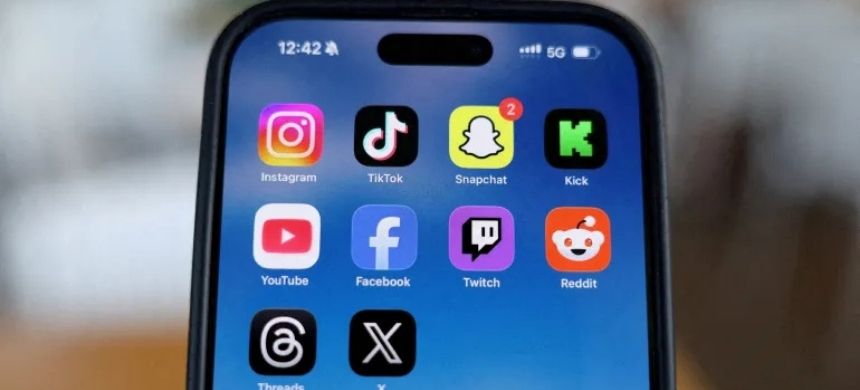
Austria announced plans to ban social media for children under 14, citing addiction, glorification of violence, misinformation, and unrealistic beauty standards. Vice-Chancellor Andreas Babler said platforms are designed to make children “deliberately dependent,” making parental control nearly impossible. The law, expected as early as this summer, will target algorithms that promote addiction and harm.
Babler highlighted that children face manipulation, unrealistic beauty ideals, and exposure to disinformation online. However, the ruling coalition has not yet agreed on a verification method. A recent three-week “no mobile phone” trial involving 72,000 students showed that pupils recognized the harmful effects of excessive screen use, Education Minister Christoph Wiederkehr reported.
In addition to the ban, Austria plans a compulsory school subject, “Media and Democracy,” to teach students to distinguish truth from falsehood and identify anti-democratic influences. The far-right FPÖ criticized the move as an attack on free speech, accusing the government of imposing censorship as alternative voices gain traction online.
Several EU countries, including France, Spain, and Denmark, have announced or are considering similar digital age limits. In the U.S., courts recently held Meta and Google liable for teenage depression linked to Instagram and YouTube, ruling that they failed to adequately warn young users of the risks of overconsumption.