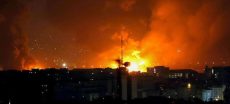
The rapidly escalating conflict in the Middle East continues to spread beyond traditional battle zones, raising serious concerns about civilian safety across the region. Despite mediation attempts by several countries, tensions remain high as missile and drone attacks intensify, affecting multiple nations and threatening the security of residents and foreign workers.
According to reports, Iran launched waves of missiles and drones targeting locations in United Arab Emirates, Kuwait, and other regional states. These attacks also placed United States military forces in the region under pressure, with American bases facing a number of attacks comparable to those directed at Israel.
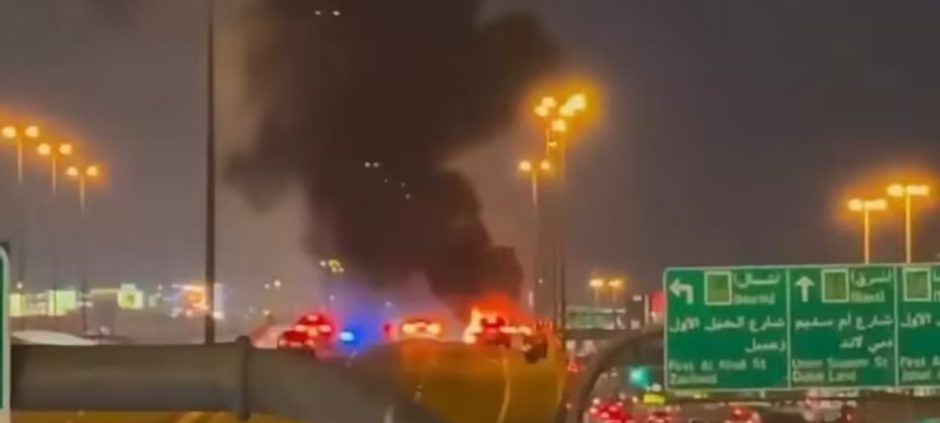
In the latest tragic incident, debris from an intercepted aerial projectile fell onto a moving vehicle, killing a Pakistani driver. The shocking event demonstrates how the widening conflict is beginning to affect civilians far from the frontlines, including migrant workers who are simply trying to earn a livelihood abroad.
The death was confirmed by the Dubai Media Office amid growing fears that the conflict could increasingly endanger ordinary residents across the Gulf region. Officials did not specify which missile or drone had been intercepted or from where it had been launched, leaving uncertainty surrounding the exact circumstances of the attack.
Authorities said this tragic incident marks the second death of a Pakistani national in the UAE since the regional war involving Iran, the United States, and Israel began escalating. The broader conflict erupted on February 28 when the United States and Israel launched coordinated military strikes against Iran, dramatically raising tensions across the Middle East.
On the same day, the UAE’s Ministry of Defence reported that another person had died in Abu Dhabi after debris from intercepted missiles struck a residential area. Initially, officials only described the victim as an Asian national.
Later, authorities confirmed that the deceased was Mureed Zaman, a Pakistani national from the district of Bannu. Zaman had been living and working in Abu Dhabi for nearly eight years and was supporting his family back home through his work abroad.
Like many overseas Pakistanis, he regularly sent money to his family in Pakistan to help sustain their household and meet daily expenses. His death has once again highlighted the vulnerability of expatriate workers caught in the crossfire of international conflicts.
Following the tragedy, the UAE government expressed sincere condolences and deepest sympathies to the victim’s family. Officials also reaffirmed their solidarity with the family during this difficult time.
Meanwhile, the Ministry of Foreign Affairs strongly condemned attacks that endanger civilian populations. The ministry emphasized that targeting civilians and infrastructure violates international law and humanitarian principles.
As the conflict continues to escalate across the Middle East, concerns are growing that more innocent civilians could become victims of a war that is rapidly expanding beyond its initial battlegrounds.
Also read: PIA Allowed to Operate two Daily UAE Flights