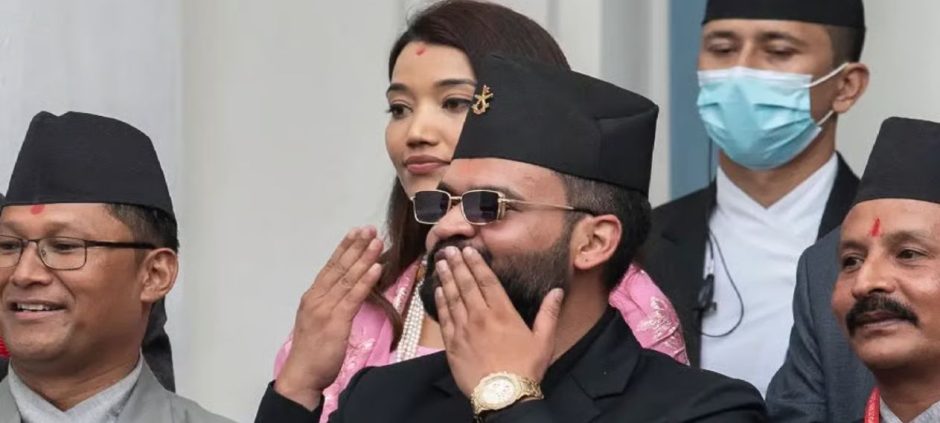
Nepal’s political scene is experiencing a dramatic shift as Balendra Shah, a former rapper and current Kathmandu mayor, has agreed to run for prime minister in the upcoming parliamentary elections on March 5, 2026, after months of youth‑led protests that shook the nation.
Shah — popularly known by his stage name Balen — has joined forces with the Rastriya Swatantra Party (RSP), a rising political group led by former TV host‑turned‑politician Rabi Lamichhane. Under the alliance, if the RSP secures a victory in the election, Balen, 35, will become prime minister while Lamichhane, 48, remains party chief.
The pact between the two leaders comes after widespread “Gen Z” youth protests in September against corruption, which resulted in 77 deaths and ultimately forced then‑Prime Minister K.P. Sharma Oli to resign. Protesters, mainly young people, called for systemic reform and accountability from Nepal’s longstanding political establishment
Analysts say the RSP’s strategy could profoundly reshape Nepali politics by appealing to disaffected young voters who have grown tired of traditional parties — particularly the Communist Party of Nepal (Unified Marxist‑Leninist) and the Nepali Congress, which have dominated power for decades. Nearly one million new voters — mostly youth — were added to the electoral roll after the protests, highlighting the growing influence of younger demographics on the country’s political future.
Balen first rose to national prominence during the protests, where he was seen as a symbolic figure for youth demands, although some critics noted that his public presence during the demonstrations was limited to social media engagement rather than street leadership. After the protests, he played a role in forming an interim government led by former Chief Justice Sushila Karki to oversee preparations for the elections.
Supporters of the alliance view it as a bold challenge to Nepal’s entrenched political factions, while critics remain skeptical about the experience and cohesiveness of two relatively non‑traditional leaders at the helm. Despite the uncertainties, the RSP’s campaign and Balen’s candidacy reflect a broader generational shift in Nepali politics, driven by calls for accountability, reform, and new leadership
Also read: Antarctica’s Thwaites Glacier Losing Grip as Cracks Outpace Melting