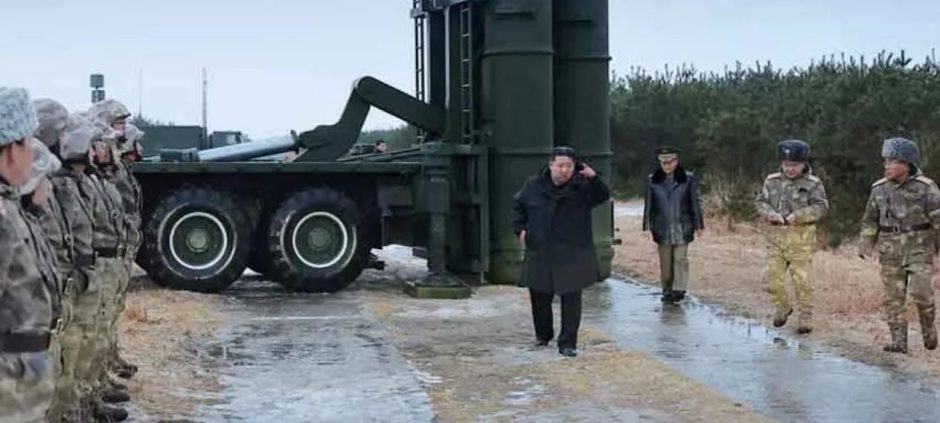
North Korean leader Kim Jong Un has indicated that his country will continue to prioritise the development of missile systems over the next five years, underlining Pyongyang’s determination to strengthen its military capabilities despite international pressure. The message was delivered during Kim’s recent inspections of key defence and munitions facilities, where he stressed the importance of expanding and modernising weapons production as part of the country’s long-term strategy.
According to state media, Kim emphasised that missile and artillery forces remain central to North Korea’s national defence policy. He described the weapons industry as a core pillar of the country’s deterrence posture, arguing that strengthening military power is essential to safeguarding sovereignty. The comments were made as preparations are underway for a major ruling party congress, expected to outline policy goals and development plans for the next half-decade.
Kim’s remarks suggest that missile development will be formally embedded in North Korea’s upcoming five-year plan. Analysts say this likely includes further work on ballistic missiles, solid-fuel technology, and improvements in accuracy and range. Over recent years, North Korea has conducted numerous missile tests, showcasing systems that it claims can reach regional and even intercontinental targets, drawing condemnation from the United States, South Korea, Japan, and other countries.
During his visits, Kim reportedly approved draft proposals aimed at modernising production lines and increasing output at military factories. State media said these proposals would be presented to the party congress for final endorsement, signalling that weapons development is not a short-term policy but a sustained national priority. This approach aligns with Pyongyang’s longstanding position that military strength is necessary to counter what it sees as hostile actions by external powers.
The renewed focus on missile development comes at a time of heightened regional tensions. Joint military exercises by the United States and South Korea, as well as deeper security cooperation among Washington, Seoul, and Tokyo, have been cited by North Korea as justification for expanding its arsenal. Pyongyang argues that its weapons programmes are defensive in nature, though critics say they pose a serious threat to regional stability.
International observers warn that continued missile development will further complicate diplomatic efforts aimed at reducing tensions on the Korean Peninsula. Sanctions remain in place, but North Korea has shown little willingness to return to denuclearisation talks without significant concessions. Kim’s latest signals suggest that, rather than scaling back, Pyongyang is preparing for a future in which military self-reliance and strategic deterrence remain at the forefront of state policy.
Also read: Hindu Extremist Groups Target Christmas Events in India