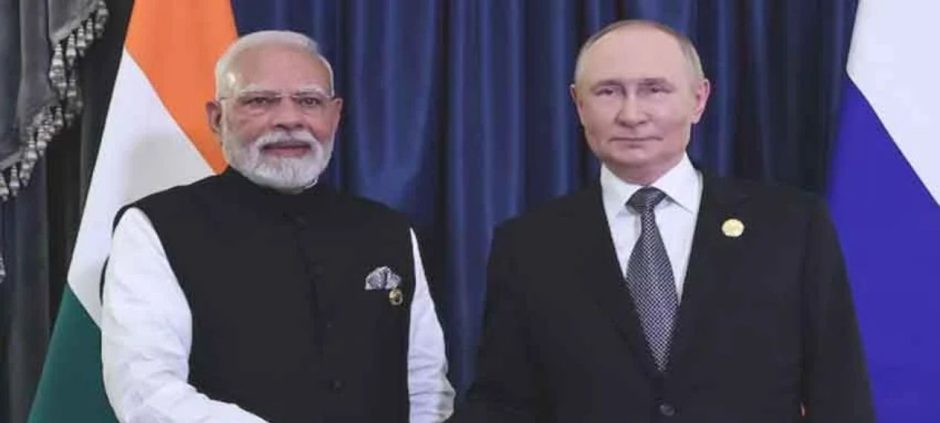
India and Russia have announced plans to expand and diversify bilateral trade during Russian President Vladimir Putin’s two-day state visit to India. Both countries aim to increase trade to $100 billion by 2030.
Bilateral trade between India and Russia has grown significantly in recent years. It rose from about $13 billion in 2021 to nearly $69 billion in 2024–25, largely driven by Indian energy imports. However, trade slowed to $28.25 billion in April–August 2025 due to lower crude oil imports and US-imposed tariffs.
India is seeking new markets to boost exports affected by Trump-era punitive tariffs. Russia also aims to increase imports of Indian goods to balance bilateral trade, which currently favors energy. Deputy Kremlin Chief of Staff Maxim Oreshkin said the Russian delegation came with a clear objective to buy more Indian goods and services.
Indian Trade Minister Piyush Goyal emphasized the importance of diversifying exports to Russia. He highlighted opportunities in automobiles, electronics, heavy machinery, industrial components, textiles, and food products. Goyal said that adding more variety would make bilateral trade more balanced and sustainable.
Russian Agriculture Minister Oksana Lut said her country is interested in importing more Indian shrimp, rice, and tropical fruits. India, the world’s largest shrimp exporter, currently supplies only 20% of Russia’s shrimp imports. Russian firms are also keen on Indian food processing equipment.
A large Russian business delegation is accompanying President Putin to New Delhi. During the visit, Putin will meet Indian Prime Minister Narendra Modi for dinner on Thursday, followed by summit talks on Friday. Officials stressed that the visit reflects a long-term strategic commitment to strengthen bilateral trade between India and Russia.
In other related news also read Trump, Modi Speak Frequently as Trade Talks Continue
Experts said diversifying exports and imports will create a more balanced and mutually beneficial trade relationship, encouraging growth in multiple sectors beyond energy.