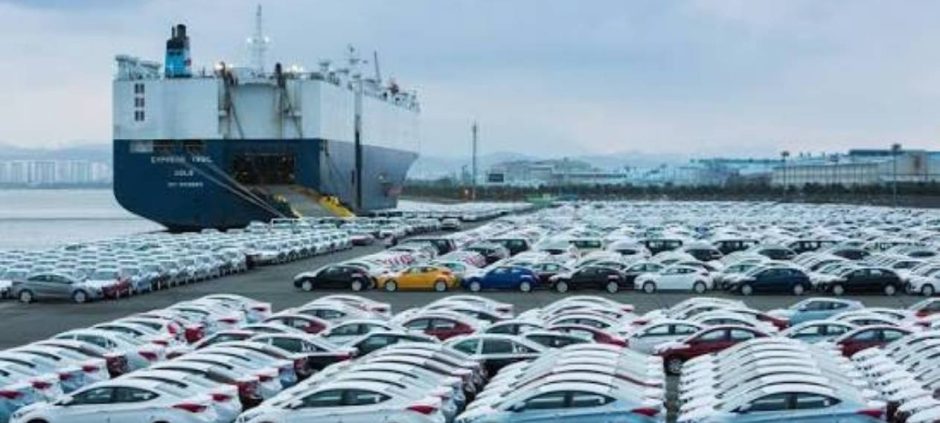
The Federal Board of Revenue (FBR) has started collecting the newly introduced Special Excise Duty (SED) on imported vehicles from July 1, following the implementation of the Finance Act 2026. The new levy is being collected at the import stage under S.R.O. 1072(I)/2026, creating varying impacts across Pakistan’s automobile market. While many lower-priced imported vehicles are expected to benefit from reduced customs duties, luxury vehicles and high-end imported electric vehicles will face significantly higher taxes.
Under the new framework, the SED is collected alongside customs duties during customs clearance under the Customs Act, 1969. The levy applies to imported goods listed in Table IA of the First Schedule, with importers required to pay the duty using the same assessment and recovery procedures that govern customs duties. The move is part of the government’s broader tariff rationalisation strategy introduced through the federal budget.
Many imported passenger vehicles are expected to see a lower overall import tax burden because customs duties have been reduced across several tariff lines. The exact amount of duty payable depends on the vehicle’s Pakistan Customs Tariff (PCT) classification. In addition, imported completely built-up (CBU) electric cars and SUVs valued at up to $75,000 remain exempt from the newly introduced Special Excise Duty, allowing buyers to benefit from lower import taxes.
However, luxury electric vehicles will face substantial new taxes. Imported CBU electric cars and SUVs valued between $75,001 and $110,000 are now subject to a 30 percent ad valorem Special Excise Duty, while those priced above $110,000 will attract a 40 percent ad valorem levy. These new taxes are expected to significantly increase the cost of importing premium electric vehicles into Pakistan.
The Finance Act 2026 also introduces high Special Excise Duties on imported petrol and diesel vehicles with larger engine capacities. Imported motor cars, SUVs, station wagons, double-cabin (4×4) pickup trucks, and racing cars with engine capacities ranging from 2,000cc to 3,000cc will now face an 86 percent ad valorem SED. Vehicles in the same category with engines above 3,000cc will be subject to an even higher 92 percent ad valorem SED, making luxury imports considerably more expensive despite reductions in customs duties.
Overall, the government’s tariff rationalisation policy is designed to reduce import duties on several categories of vehicles while imposing heavier taxes on luxury and high-value imports. As a result, many affordable imported passenger vehicles and electric vehicles below the specified price threshold may become relatively cheaper, whereas premium imported cars and SUVs are expected to see a noticeable increase in import costs.
Also read: FBR Revises Customs Valuation for Imported Auto Parts