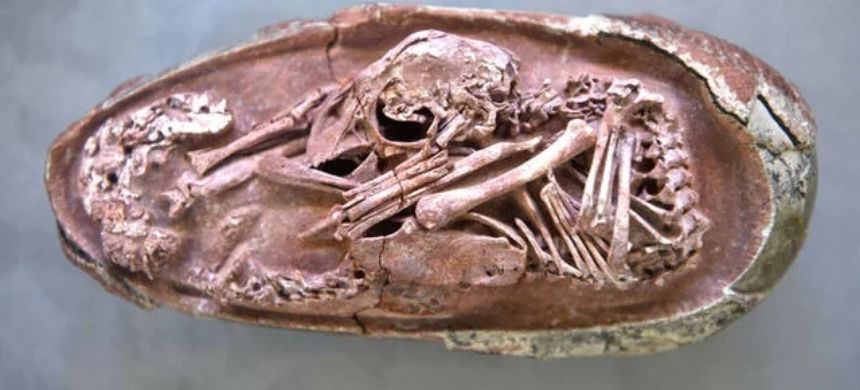
Paleontologists in southern France have made an extraordinary discovery of hundreds of dinosaur eggs dating back nearly 72 million years, uncovering one of the world’s most significant prehistoric nesting grounds.
The find occurred at the Mèze fossil site, where winter excavations revealed a vast concentration of eggs preserved within Upper Cretaceous rock layers. Remarkably, many eggs remain intact, with shells and internal structures still visible, offering an unprecedented glimpse into ancient dinosaur reproduction.
According to Alain Cabot, director-curator of the Musée-Parc des Dinosaures de Mèze, the site represents an “exceptional concentration” of fossilized eggs spread over approximately 15 square miles. Within just a few weeks, more than 100 eggs were unearthed, and scientists believe many more remain buried beneath the surrounding sediment. The density of the fossils indicates that this area functioned as a large and repeatedly used nesting ground for dinosaurs during the Late Cretaceous.
Initial studies show that most of the dinosaur eggs belonged to titanosaurs, the massive long-necked herbivores of that era. However, eggs from smaller species were also discovered, including armored ankylosaurs and rare small carnivorous theropods like Prismatoolithus caboti. This diversity suggests that multiple species shared the same nesting environment, much like modern bird colonies that gather in protected areas to raise their young.
Geologists believe periodic flooding buried the eggs quickly under layers of sediment, preserving them from erosion and creating natural time capsules that have survived for millions of years.
The discovery has captured significant public interest, with ongoing excavations now open for visitors to observe scientists at work. Updates shared by the museum online have further drawn attention to the find, highlighting its importance.
The Mèze fossil site provides invaluable insight into dinosaur reproductive behavior and life during the final chapter of the Cretaceous period, making it one of the most remarkable discoveries in paleontology.
In recent developments, New Dinosaur Footprint Discovery Expands Ancient “Dinosaur Highway”