Pakistan has reiterated its opposition to adding new permanent members to the United Nations Security Council. Officials argue that expanding permanent membership would increase the body’s dysfunction and undermine the principle of sovereign equality.
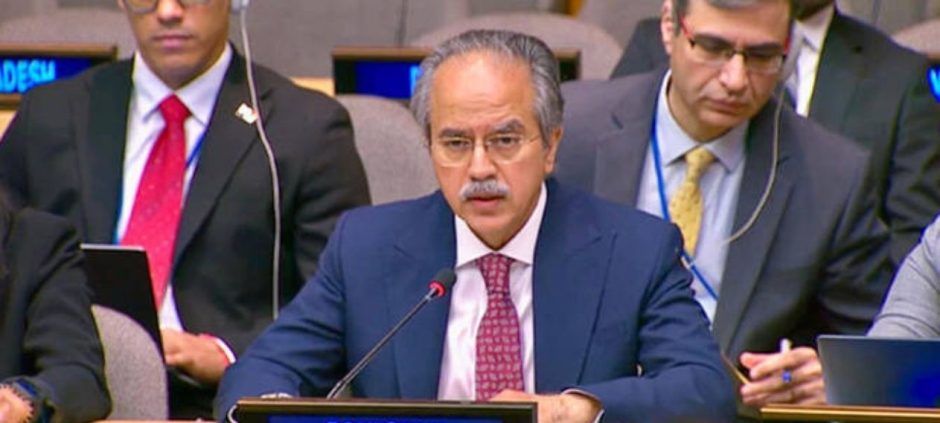
Ambassador Asim Iftikhar Ahmad, Pakistan’s permanent representative to the UN, spoke during a resumed session of the long-running Intergovernmental Negotiations (IGN) on Friday. He emphasized that individual permanent membership proposals contradict the principles of fair reform.
As a member of the Uniting for Consensus (UfC) group, Pakistan advocates expanding only non-permanent, elected seats. Ambassador Ahmad said this approach ensures “REFORM FOR ALL – PRIVILEGE FOR NONE” while enhancing democratic representation.
Full-scale negotiations on Security Council reform began in February 2009. They focus on five areas: membership categories, veto power, regional representation, Council size, and working methods. Progress has stalled as G-4 countries — India, Brazil, Germany, and Japan — push for permanent seats, while Pakistan and the UfC group oppose them, warning that they would create “new centers of privilege.”
As a compromise, the UfC proposes a new category of members with longer terms and the possibility of re-election, without granting permanent status. The Security Council currently has five permanent members — Britain, China, France, Russia, and the United States — and ten non-permanent members elected for two-year terms.
Ambassador Ahmad highlighted that permanent membership and veto power are central to the Council’s paralysis. He said adding new permanent members would entrench elite power rather than balance influence.
Pakistan supports increasing elected non-permanent seats to enhance transparency, inclusivity, and accountability. Ambassador Ahmad also emphasized fair representation for under-represented regions, including Africa, small island developing states, and OIC members.
In other related news also read Pakistan Plans AI-Powered Government Operating System
The Pakistani envoy stressed the need for flexibility in negotiations and criticized rigid positions by some countries. He reaffirmed that genuine reform must prioritize democratic principles over special privileges for individual states.