
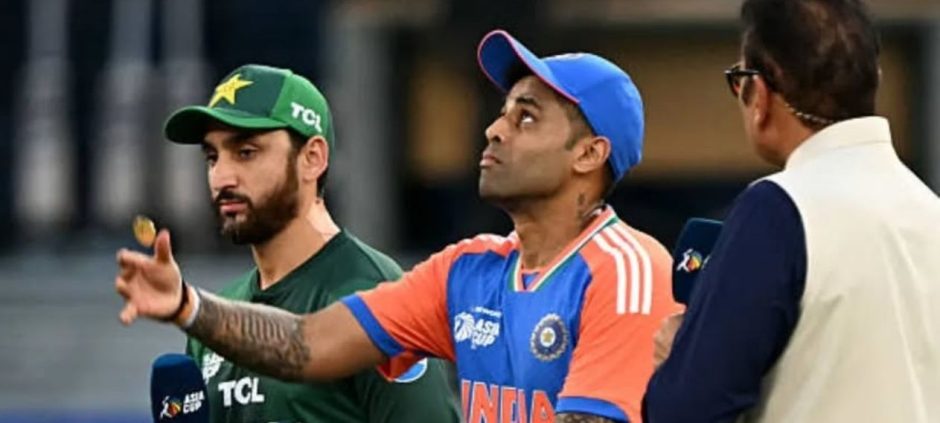
Pakistan arrive at this World Cup with something they have often lacked in recent tournaments: continuity. A settled coaching staff and a somewhat stable squad have brought decent clarity to roles and game plans, reflected in solid performances heading into the competition and in the opening matches. But as always, Pakistan’s true measure at a global event is defined by one fixture. With the high‑stakes clash against India looming, this contest will serve as the clearest examination yet of Pakistan’s progress — technically, tactically, and mentally.
Matches against India are rarely just another group game. They are, in many ways, audits of an entire cricketing structure. Victory brings validation; defeat invites scrutiny — of selection, coaching philosophy, and individual skill sets. The scale of the challenge is underscored by India’s record in recent white‑ball World Cups, where sustained success has been built on depth, balance, and excellent execution of skills under pressure.
Batting depth remains Pakistan’s most pressing concern. Against elite opposition, the margin for error is minimal, and Pakistan cannot afford a fragile middle order. The long‑held narrative frames Pakistan–India encounters as Pakistan’s bowling versus India’s batting, but history since the 1992 World Cup tells a different story. Time and again, it has been India’s bowlers — disciplined in length and execution — who have waited patiently for Pakistan’s batters to make mistakes. That blueprint has consistently delivered World Cup victories.
Relying on four specialist batters and a wicketkeeper whose returns remain inconsistent is a high‑risk strategy, particularly against a varied Indian attack. An early loss of wickets could quickly tilt the contest into one‑sided territory. To mitigate that risk, Pakistan should seriously consider including Fakhar Zaman in the XI at No. 5 or 6. He has the big match ability and can put pressure on India’s spinners.
That inclusion, however, comes at a cost. One all‑rounder must make way. Among Mohammad Nawaz, Shadab Khan, and Faheem Ashraf, Nawaz could be the one to omit for this specific matchup. India’s likely lineup features 5-6 left‑handers, limiting Nawaz’s bowling utility. While Nawaz has performed admirably over the past year, tournament cricket — and particularly games of this magnitude — often demand horses for courses. Fakhar’s experience and big‑match temperament could provide Pakistan with much‑needed ballast.
Pakistan’s pace bowling attack, traditionally its greatest strength, also presents difficult decisions. Shaheen Shah Afridi’s form and fitness remain areas of concern. On current evidence, Naseem Shah offers greater reliability — effective with the new ball and markedly superior at the death. His control across phases gives Pakistan a clearer tactical framework.
A combination built around Naseem Shah and Faheem Ashraf appears the most balanced option on Sri Lankan wickets. Faheem’s control, his cutters and lower‑order batting add value, while Naseem’s skill set allows Pakistan to attack early and close well at death. Behind the stumps, the debate between Khawaja Nafay and Usman Khan tilts toward Nafay when viewed through the lens of modern T20 batting demands. Nafay seems to be overall better equipped to get quick runs and he plays with confidence whenever he comes to bat. For the India game though its unlikely Nafay will play.
Beyond the India fixture, Pakistan’s broader tournament prospects remain encouraging. Even if the India game result doesn’t go Pakistan’s way, qualification for the Super 8s appears likely. With Abrar Ahmed and Usman forming a credible spin partnership, and conditions in Sri Lanka expected to assist slower bowlers, a semifinal berth is a realistic target.
Rain‑affected matches, however, could pose challenges. Shortened games reduce the influence of spin and place greater emphasis on power‑hitting — an area where Pakistan may struggle against sides such as England, India, or South Africa.
What works well in Pakistan’s favor is a coaching group that appears thoughtful and pragmatic, willing to make logic‑driven decisions. The spin attack looks settled, and Naseem Shah, if used smartly with both new and old ball, can solidify the pace department
Ultimately, the path to a deep tournament run hinges on the Pakistan’s batters delivering enough runs for bowlers to win games. Pakistan should field five specialist batters plus a wicketkeeper capable of meaningful contributions. The top four batters need to deliver consistently. If Pakistan shores up the batting and makes bold but calculated selection calls, they have the tools to go deep into this World Cup.